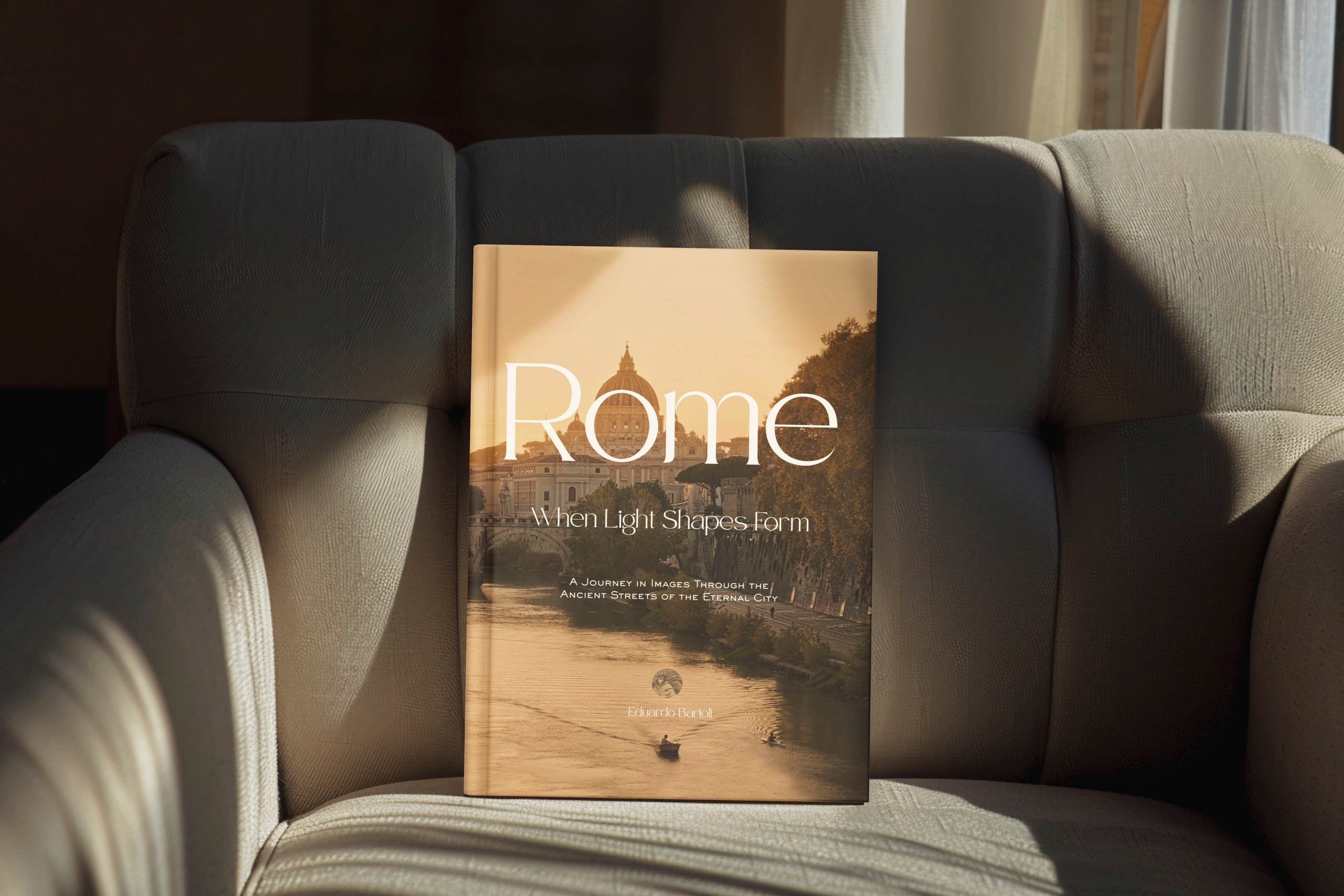
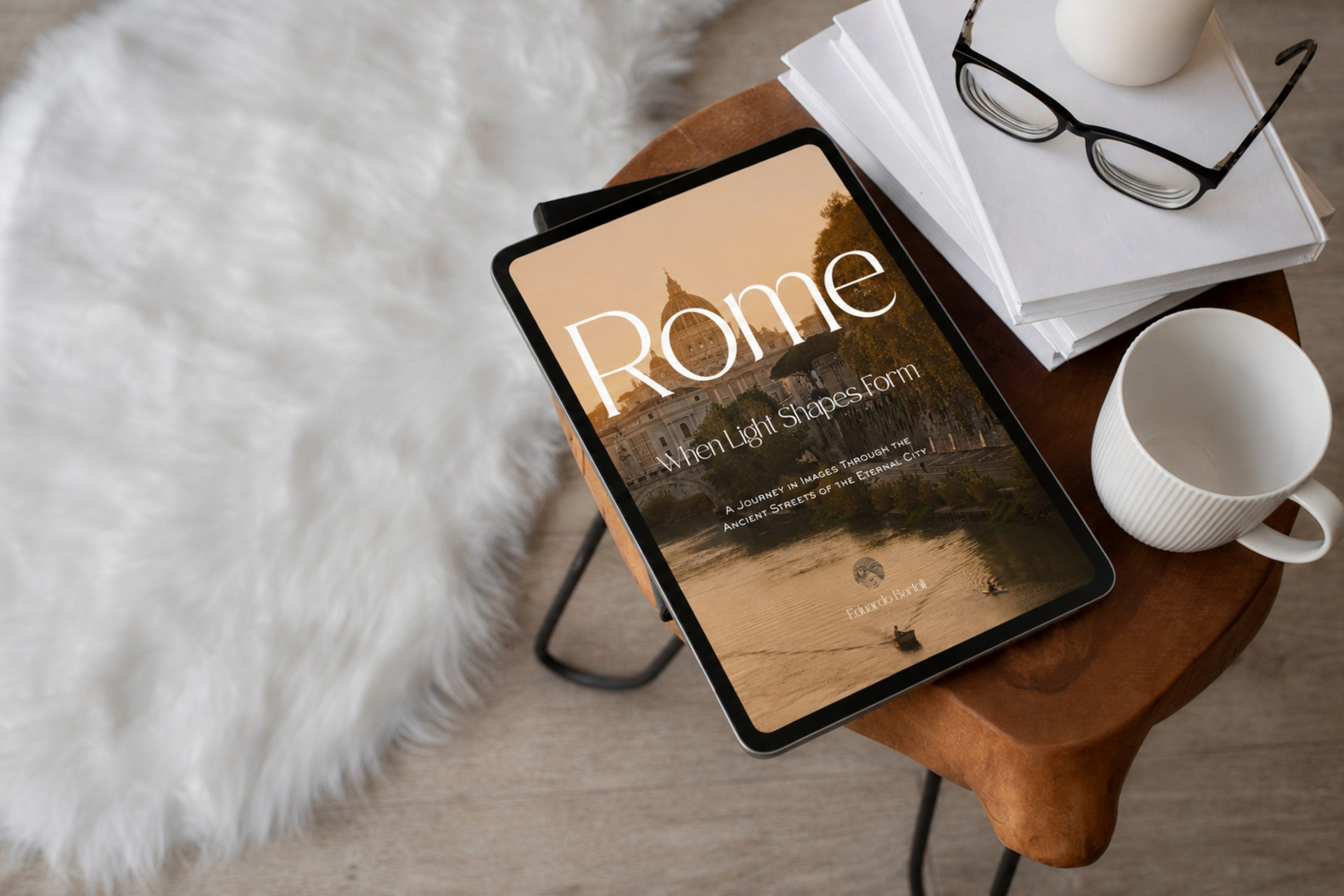
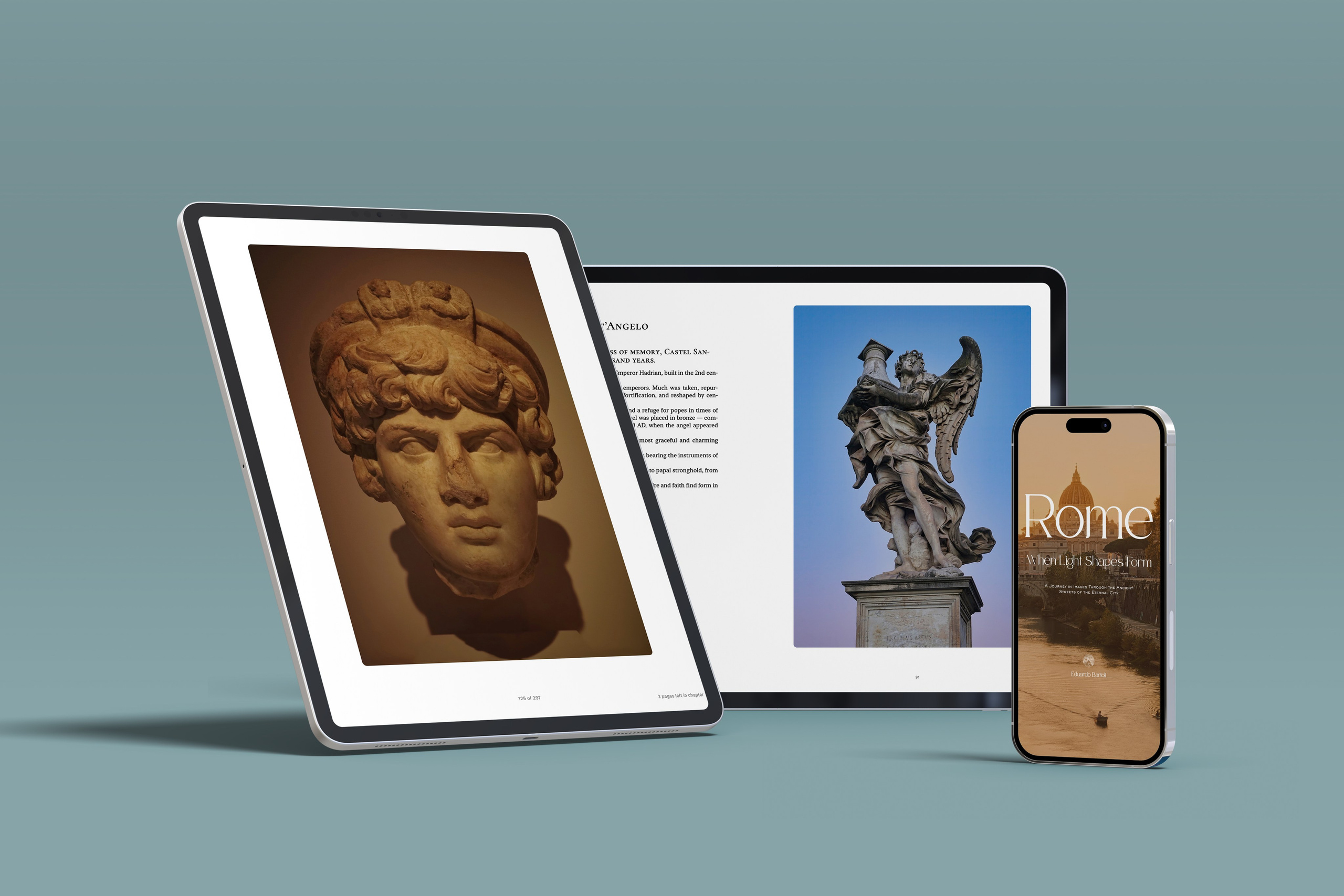
Rome Photography Book — When Light Shapes Form | Eduardo Bartoli. Eduardo Bartoli Photography

There are cities you visit, and then there is Rome — a place you remember, even without knowing why.


Its ancient stones breathe memories, and its charm lingers in every narrow alley and every sunlit ruin.Built on layers of history and echoes of the past, Rome renews itself each day with beauty and quiet wonder — and through these pages, you are invited to see it in a different way: to rediscover art, architecture, and the Eternal City itself with a renewed sense of wonder.

Photography of Italy – Seagull at the Roman Forum in Rome, photographed as part of a photography book about Rome.
A seagull standing among the ruins of the Roman Forum in Rome, photographed during the creation of the book Rome – When Light Shapes Form. The image captures the quiet presence of everyday life within one of the city’s most historic spaces.
Photography of Italy – Giovanni Paolo Panini capriccio with the Colosseum and Roman monuments, 18th-century oil painting included in a photography book about Rome.
An 18th-century oil painting by Giovanni Paolo Panini depicting a capriccio with the Colosseum and various Roman monuments, included in the book Rome – When Light Shapes Form as part of the visual dialogue between photography and historic representations of the city.
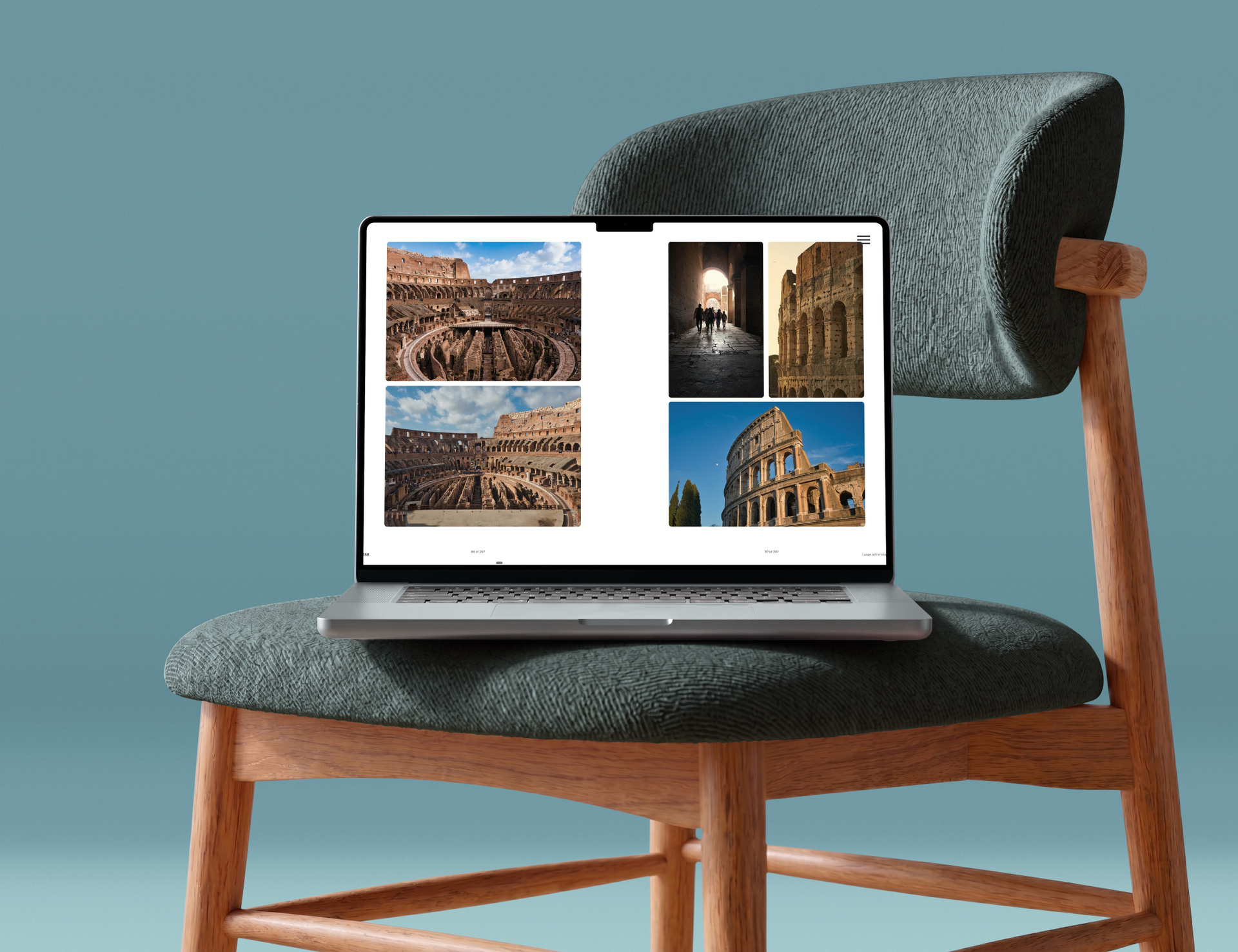
Photography of Italy – Inside the Colosseum in Rome at sunset, photographed as part of a photography book about Rome.
Interior view of the Colosseum in Rome, the Flavian Amphitheatre built in the 1st century AD, seen at sunset as light moves across its ancient arches and stone structure, revealing the enduring presence of Rome’s imperial past.
Photography of Italy – Trajan’s Market and the Tower of the Milizie in Rome, photographed as part of a photography book about Rome.
View of Trajan’s Market and the Tower of the Milizie in Rome, part of the Imperial Fora area. Trajan’s Market, built in the early 2nd century AD under Emperor Trajan, stands alongside the medieval tower, reflecting the layered history of the city.
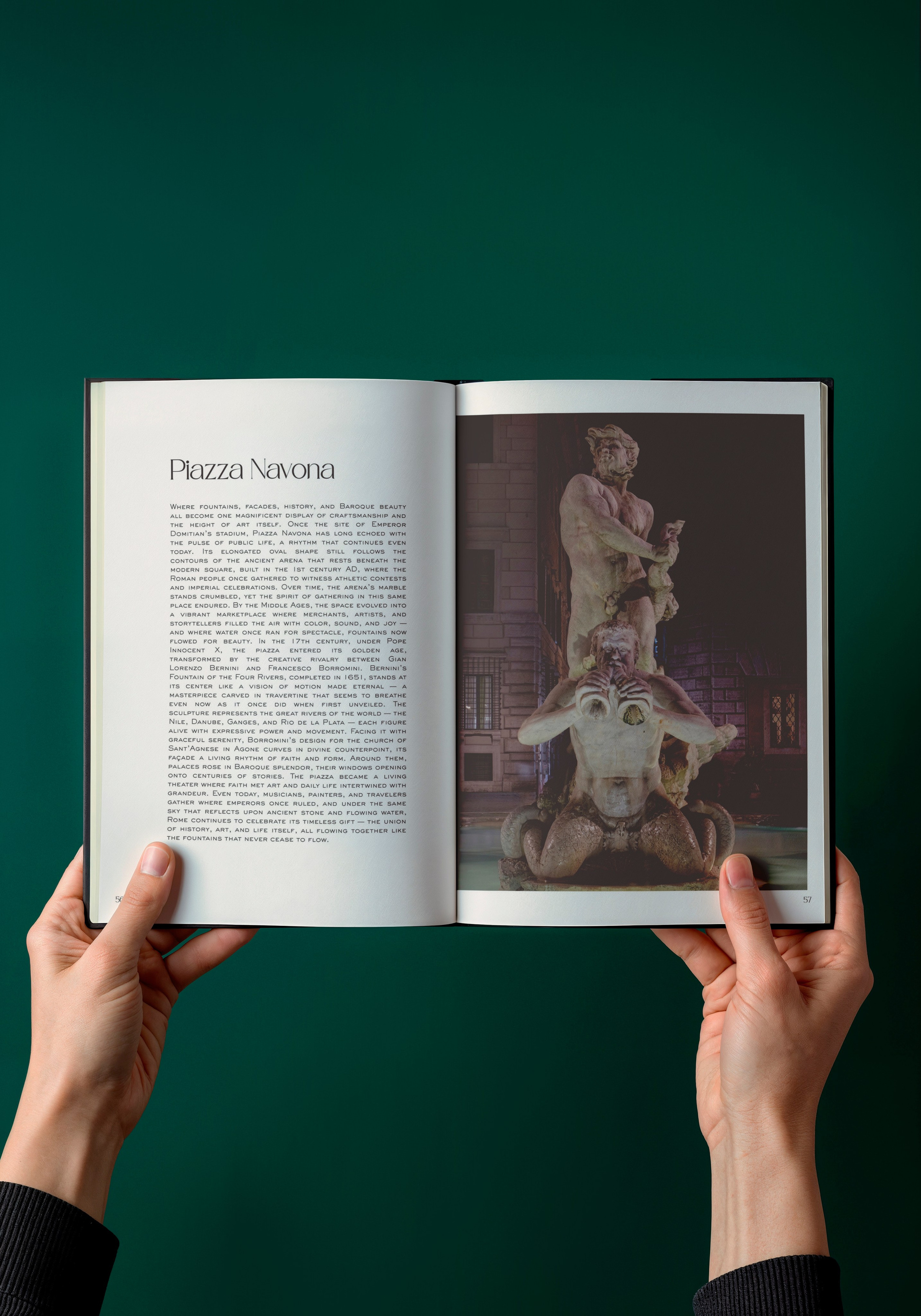
Photography of Italy – Fontana dei Quattro Fiumi in Rome, photographed as part of a photography book about Rome.
View of the Fontana dei Quattro Fiumi in Piazza Navona, designed by Gian Lorenzo Bernini and completed in 1651. The Baroque fountain represents the four great rivers of the known continents, with the ancient obelisk rising at its center, a symbol of Rome’s layered history and artistic ambition.
Photography of Italy – Johann Heinrich Wilhelm Tischbein painting of Goethe in the Roman Campagna, included in a photography book about Rome.
Painting by Johann Heinrich Wilhelm Tischbein depicting Johann Wolfgang von Goethe in the Roman Campagna, created in the late 18th century. The work reflects the Grand Tour tradition and the enduring cultural dialogue between Rome, landscape, and classical ideals.
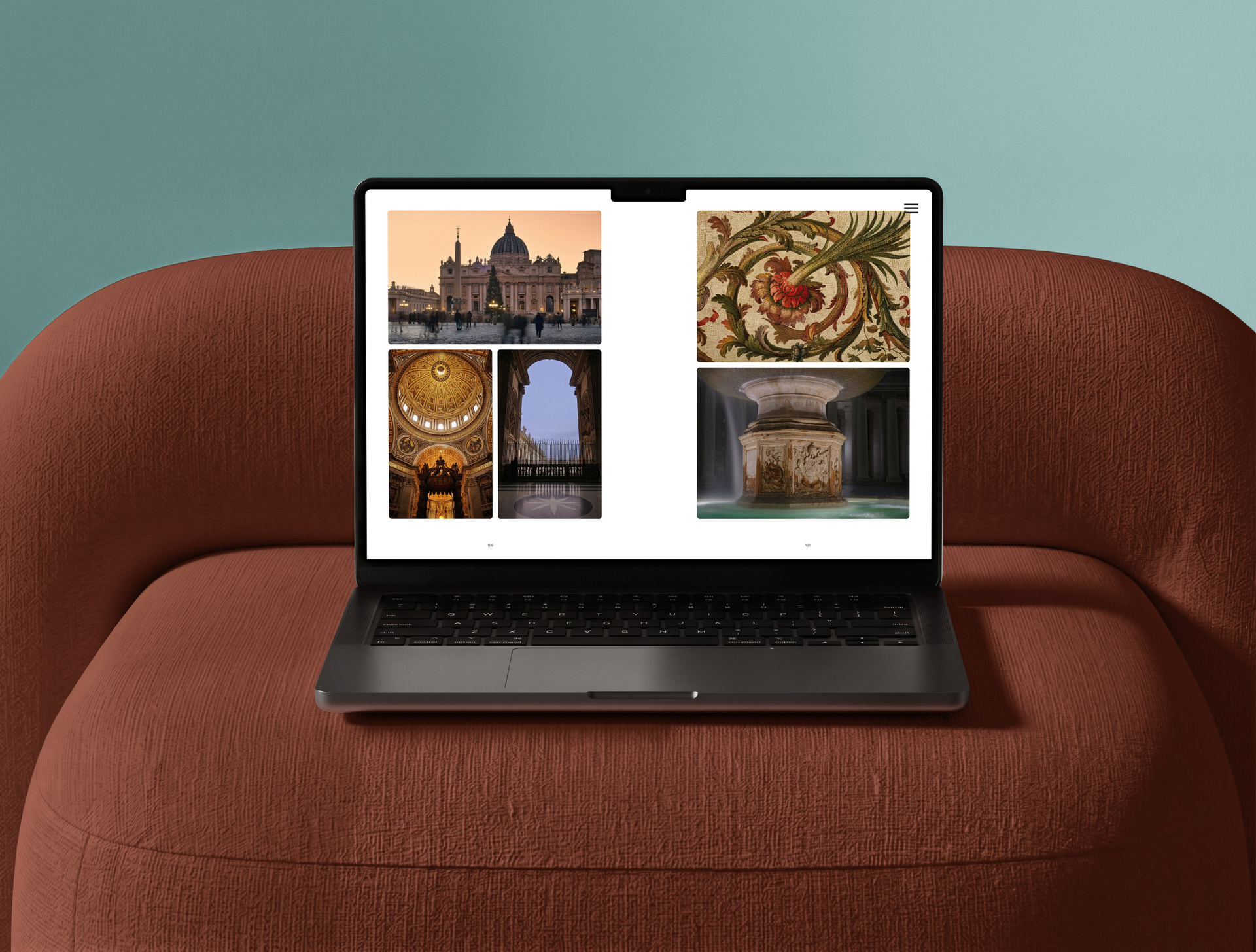
Photography of Italy – Sunset view overlooking St. Peter’s Basilica in Rome, photographed as part of a photography book about Rome.
Sunset view overlooking St. Peter’s Basilica in Vatican City, the Renaissance church designed by artists including Bramante, Michelangelo, and Bernini. The image frames the dome against the evening sky, evoking the long architectural and spiritual history of Rome.
Photography of Italy – Olive trees and fields at Hadrian’s Villa in Tivoli near Rome, photographed as part of a photography book about Rome.
Olive trees and open fields within the grounds of Hadrian’s Villa at Tivoli, part of the rural landscape that has surrounded the site since Roman times. The quiet grove evokes the enduring presence of nature alongside the history of the ancient retreat.
Photography of Italy – Long exposure view of the Spanish Steps in Rome, photographed as part of a photography book about Rome.
Long-exposure photograph of the Spanish Steps in Rome, the monumental stairway built in the early 18th century to connect Piazza di Spagna with the church of Trinità dei Monti. The extended exposure emphasizes the passage of time within one of the city’s most recognizable urban spaces.
Photography of Italy – Replica of the Temple of Antoninus and Faustina in Villa Borghese, Rome, photographed as part of a photography book about Rome.
Replica of the Temple of Antoninus and Faustina located in Villa Borghese, Rome. The structure reflects 18th–19th century neoclassical interest in ancient Roman architecture and the tradition of recreating classical monuments within landscaped gardens.
Photography of Italy – Giovanni Battista Piranesi etching of Roman antiquities with architectural perspectives and grotesques, 1749, included in a photography book about Rome.
Etching by Giovanni Battista Piranesi from 1749, depicting architectural perspectives of Roman antiquities filled with grotesques and imaginative elements. The work reflects Piranesi’s deep engagement with classical ruins and his influential role in shaping the visual understanding of ancient Rome during the 18th century.
Photography of Italy – Theatrical mask relief in the Vatican Museums in Rome, photographed as part of a photography book about Rome.
Relief featuring a theatrical mask in the Vatican Museums, Rome, reflecting the classical tradition of drama and its enduring presence in Roman art. Such motifs recall the cultural importance of theatre in antiquity and the continued appreciation of these forms through centuries of collection and preservation.
Photography of Italy – The Vatican at dusk in Rome, photographed as part of a photography book about Rome.
View of the Vatican at dusk, with the outline of St. Peter’s Basilica emerging as daylight fades. The scene reflects the transition between day and night in one of Rome’s most historically and spiritually significant areas.
Photography of Italy – The Vittoriano monument and crown of Liberty in Rome, photographed as part of a photography book about Rome.
Detail of the Vittoriano monument in Rome, focusing on the crown of Liberty that crowns the structure dedicated to Victor Emmanuel II. Completed in the early 20th century, the monument reflects Italy’s national identity and the symbolic language of unity and remembrance.
Photography of Italy – Horse representing the Danube River at the Fountain of the Four Rivers in Rome, photographed as part of a photography book about Rome.
Detail of the Danube River figure from the Fountain of the Four Rivers in Piazza Navona, sculpted by Gian Lorenzo Bernini in the mid-17th century. The river is symbolically represented by the horse, a motif associated with strength and movement within the Baroque composition.
Photography of Italy – Banks of the Tiber River in Rome in summer with a solitary figure walking along the river, photographed as part of a photography book about Rome.
View of the banks of the Tiber River in Rome during the summer, with a solitary figure walking toward the camera, unaware of being photographed. The quiet presence of the passerby introduces a human moment within a river landscape that has accompanied the city since antiquity.
Photography of Italy – Theatre of Marcellus in Rome during evening blue hour, photographed as part of a photography book about Rome.
View of the Theatre of Marcellus in Rome during the evening hours, the ancient structure begun under Julius Caesar and completed by Augustus in the late 1st century BC. The scene captures the monument as daylight fades, emphasizing its enduring presence within the modern city.
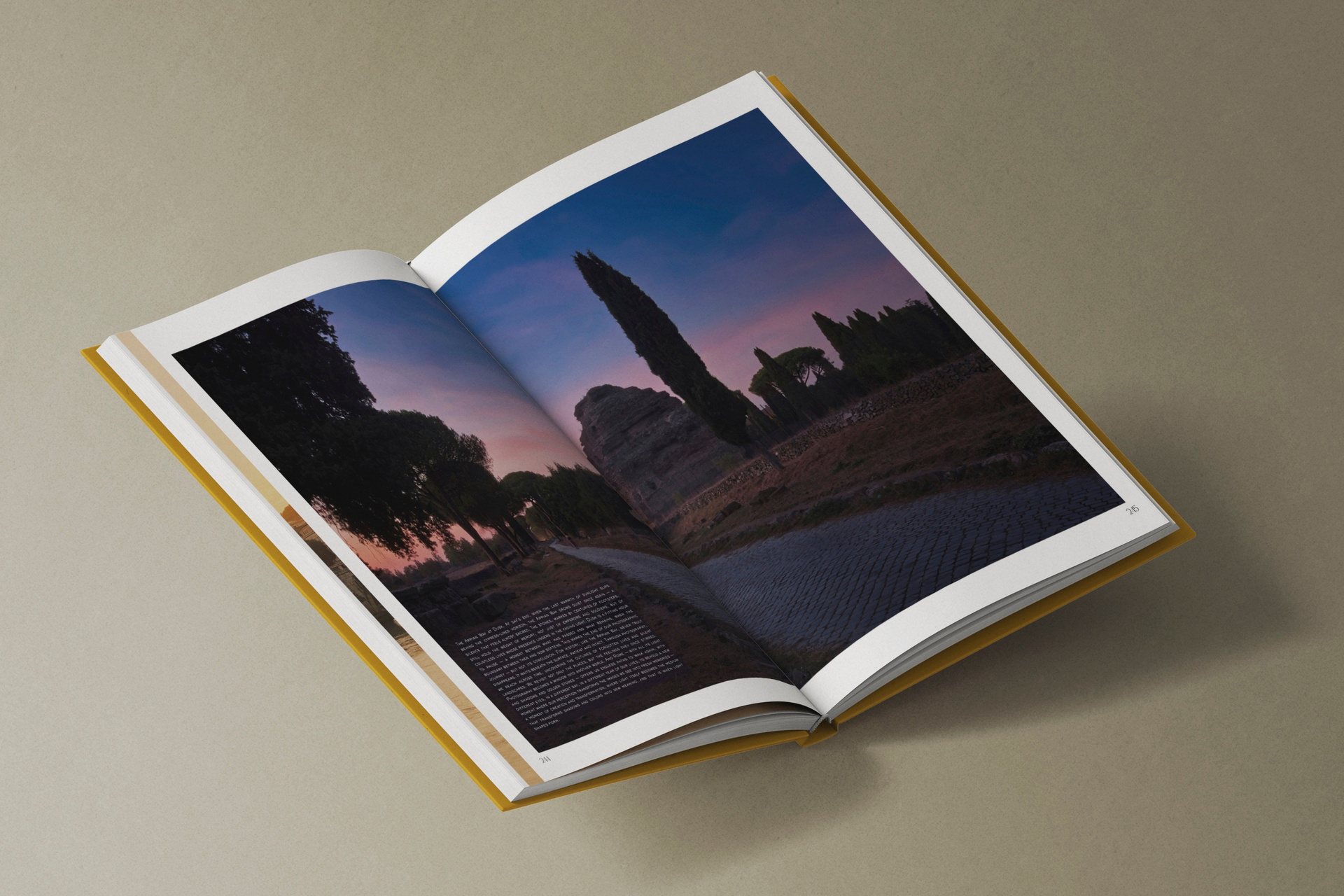
Photography of Italy – Tomb of the Servili along the Appian Way in Rome, photographed as part of a photography book about Rome.
View of the Tomb of the Servili along the Appian Way in Rome, one of the ancient funerary monuments that lined the historic road. The structure reflects Roman burial practices and the importance of memory and lineage along this major route leading into the city.
Photography of Italy – Replica garden statue at Hadrian’s Villa in Tivoli near Rome, photographed as part of a photography book about Rome.
Replica garden statue at Hadrian’s Villa in Tivoli, set within the landscaped grounds of the imperial complex built in the 2nd century AD for Emperor Hadrian. The statue reflects the long tradition of classical sculpture and its later reinterpretation within historic sites.
Photography of Italy – Fountain in St. Peter’s Square in Rome, long exposure, photographed as part of a photography book about Rome.
Long-exposure view of one of the fountains in St. Peter’s Square, Rome, part of the grand Baroque ensemble designed during the 17th century. The fountain stands within the architectural setting of the Vatican, reflecting the ceremonial and urban vision of the square.
Photography of Italy – The Pantheon in Rome during summer, photographed as part of a photography book about Rome.
View of the Pantheon in Rome during the summer season, the ancient temple rebuilt under Emperor Hadrian in the early 2nd century AD. The image presents the monument within the rhythms of the city as it continues to function as both historic landmark and living space.
Photography of Italy – Joseph Mallord William Turner painting Modern Rome, Campo Vaccino, included in a photography book about Rome.
Painting Modern Rome – Campo Vaccino by Joseph Mallord William Turner, created in the early 19th century. The work depicts the Roman Forum as a pastoral landscape, reflecting Romantic interpretations of ancient ruins and the coexistence of everyday life with Rome’s classical past.
Photography of Italy – Villa of Maxentius along the Appian Way in Rome, photographed as part of a photography book about Rome.
View of the Villa of Maxentius along the Appian Way in Rome, part of the imperial complex built in the early 4th century AD during the reign of Emperor Maxentius. The site reflects the monumental architecture and ceremonial landscape that once marked this historic road.
Photography of Italy – Colosseum in Rome at sunset, photographed as part of a photography book about Rome.
View of the Colosseum in Rome at sunset, the Flavian Amphitheatre built in the 1st century AD. The monument appears against the fading light, recalling its long history as a symbol of imperial Rome and the passage of time within the city.

About the Book


Rome — When Light Shapes Form is a photographic journey through a city shaped by time and deep history, filled with memories and an endless sense of renewed passion for art and beauty. Rome is a place you don’t simply visit once — it stays with you forever. Its ancient stones carry deep stories, and its streets invite you to slow down and observe with care.

Living in Rome for nearly a year, photographer Eduardo Bartoli walked the city every day, watching how it unfolded and changed with the seasons. Through this experience, he discovered textures formed by centuries of art and architecture, corners of unexpected beauty, and moments that reveal themselves only to those who move slowly through the Eternal City.

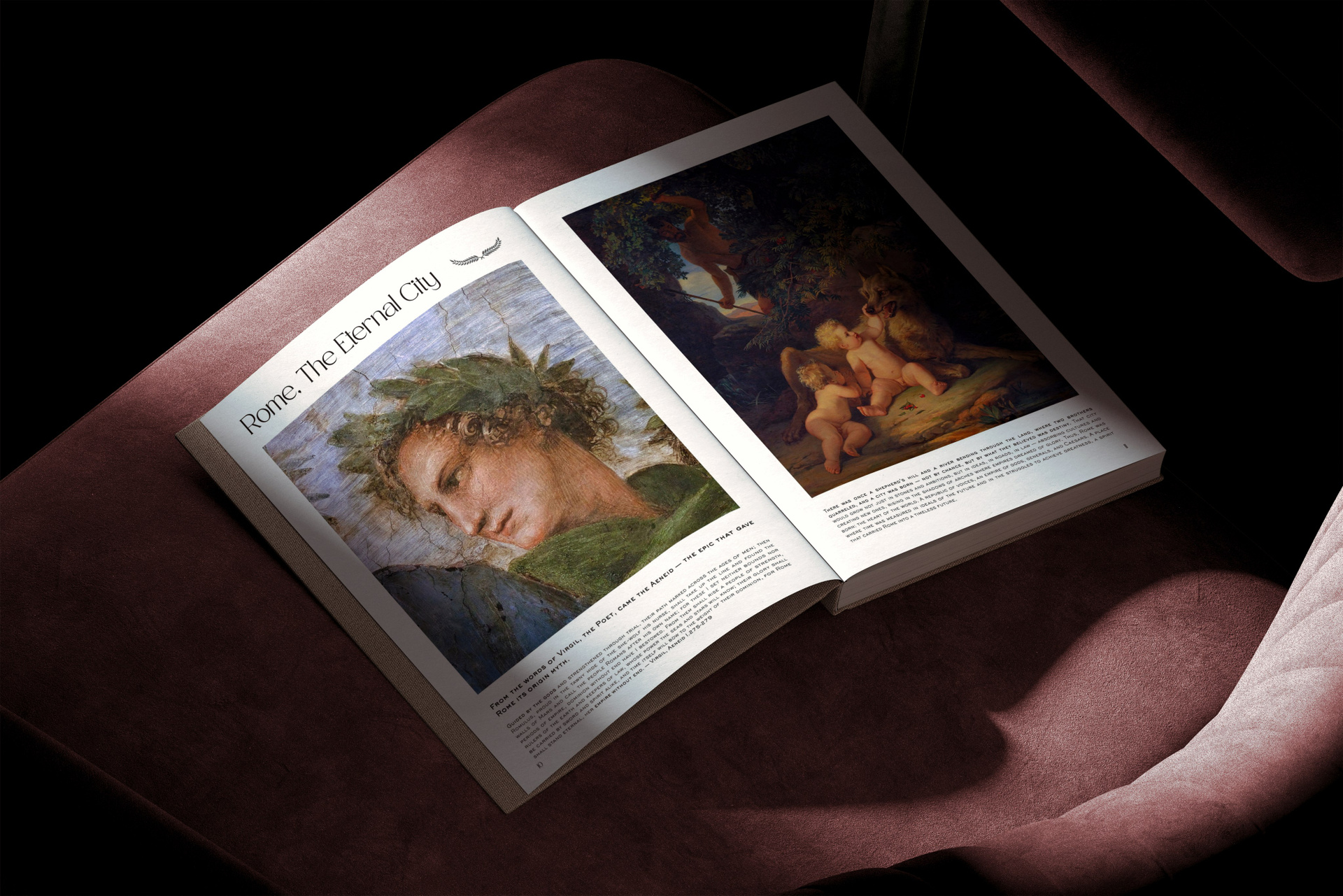
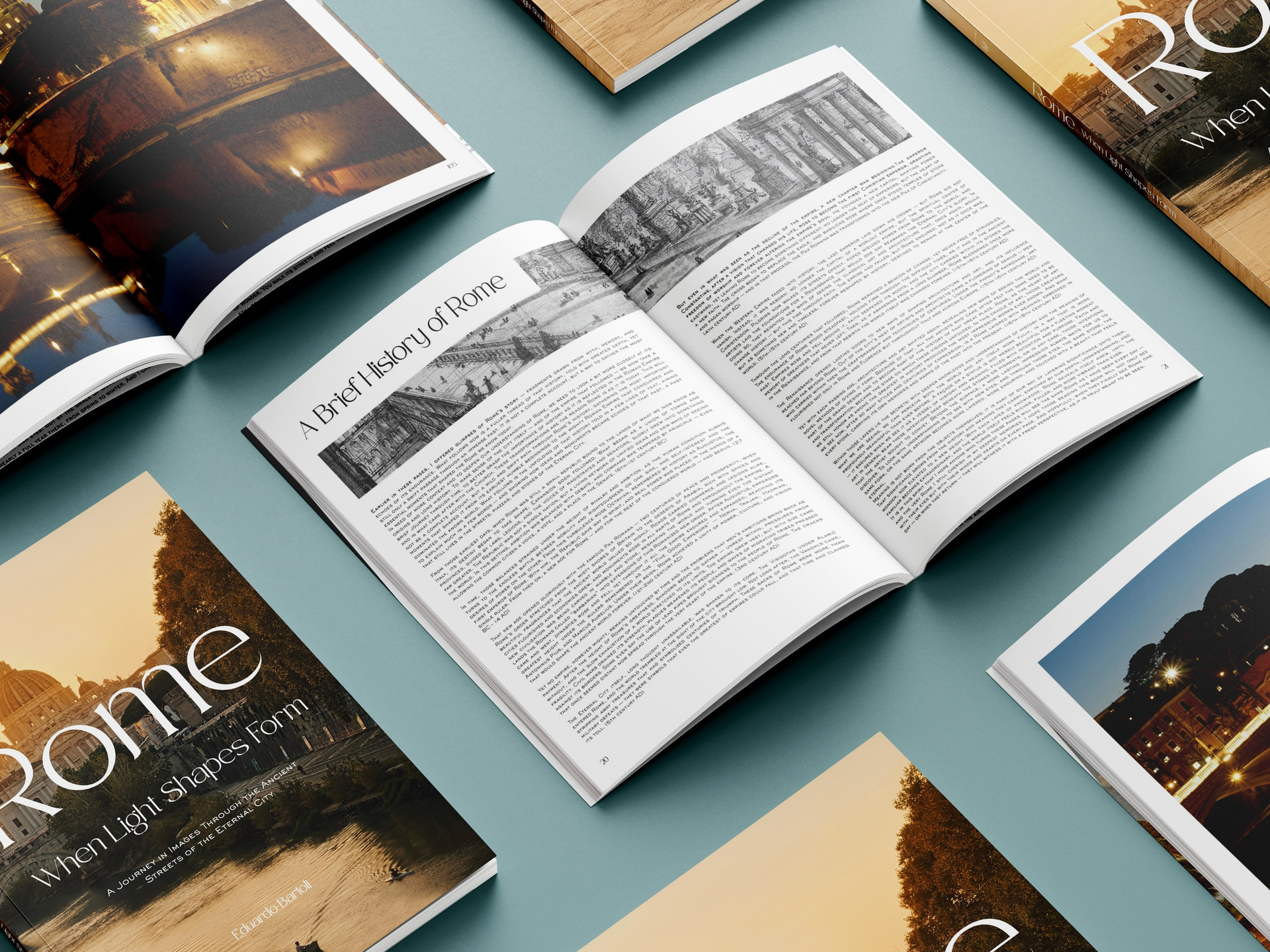
Blending nearly 200 images — including 175 original photographs and 19 historic paintings — the book brings together photography, art, architecture, history, observation, and storytelling. It reveals Rome as few people experience it, focusing on quiet details most often missed: how light shapes architecture, how textures reveal time and history, and how color and harmony influence emotion.

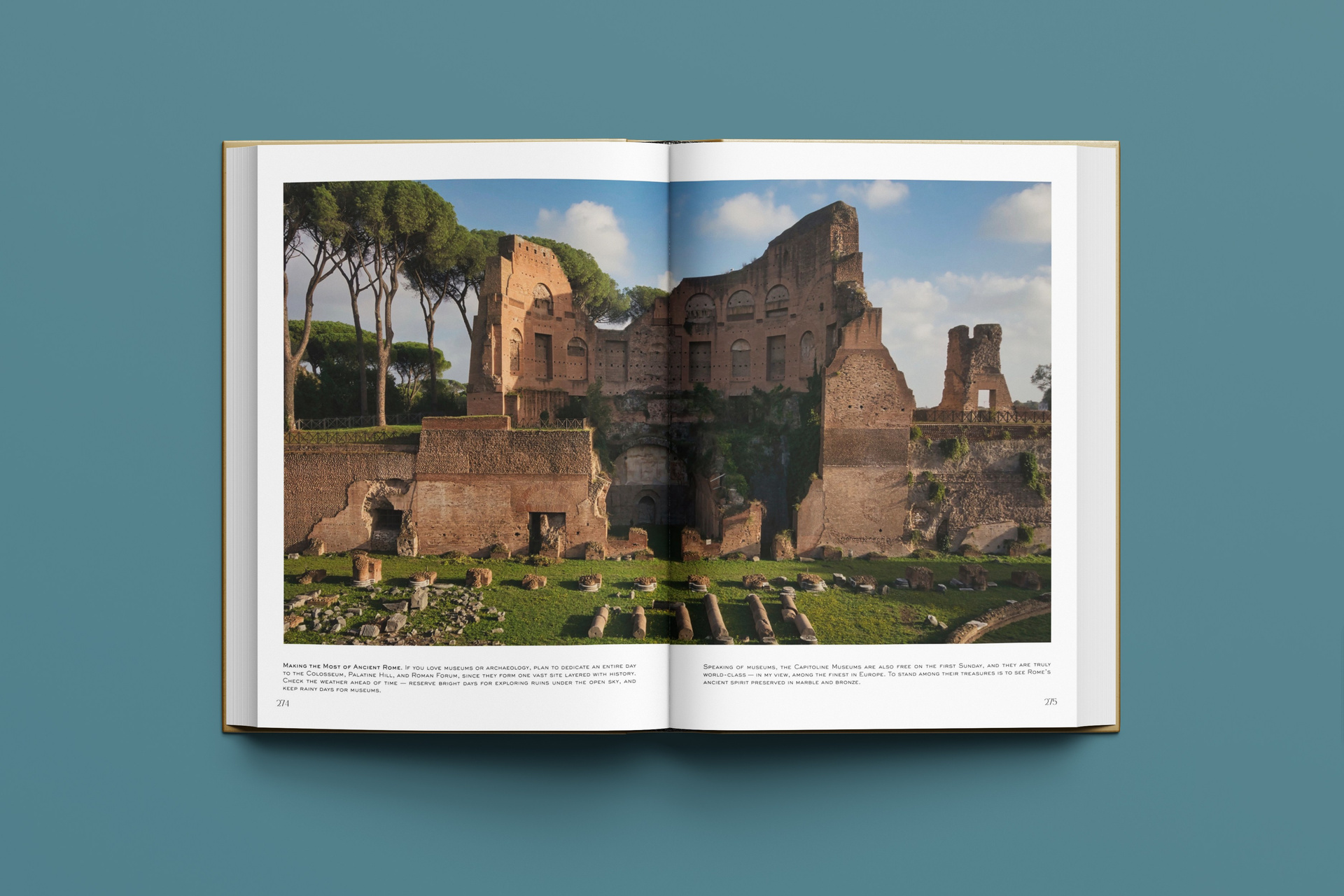
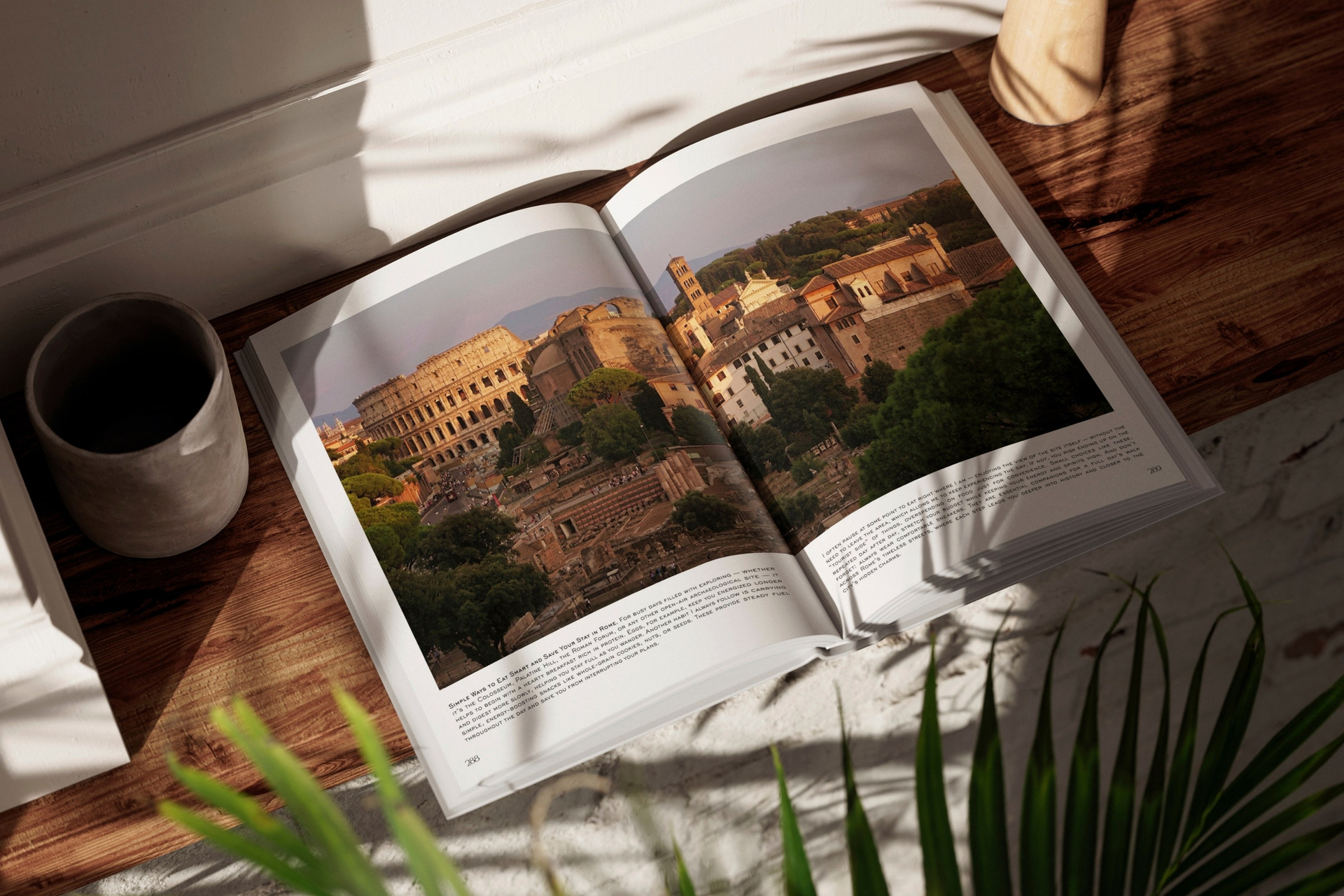
Across more than a dozen iconic locations, the book combines original photography, classical paintings of Rome, reflections and useful insights, a complete image index, and the story behind the project. Printed in premium color on thick white paper, it offers a visual and emotional experience meant to stay with the reader — inviting not just admiration of Rome, but a different way of seeing it.

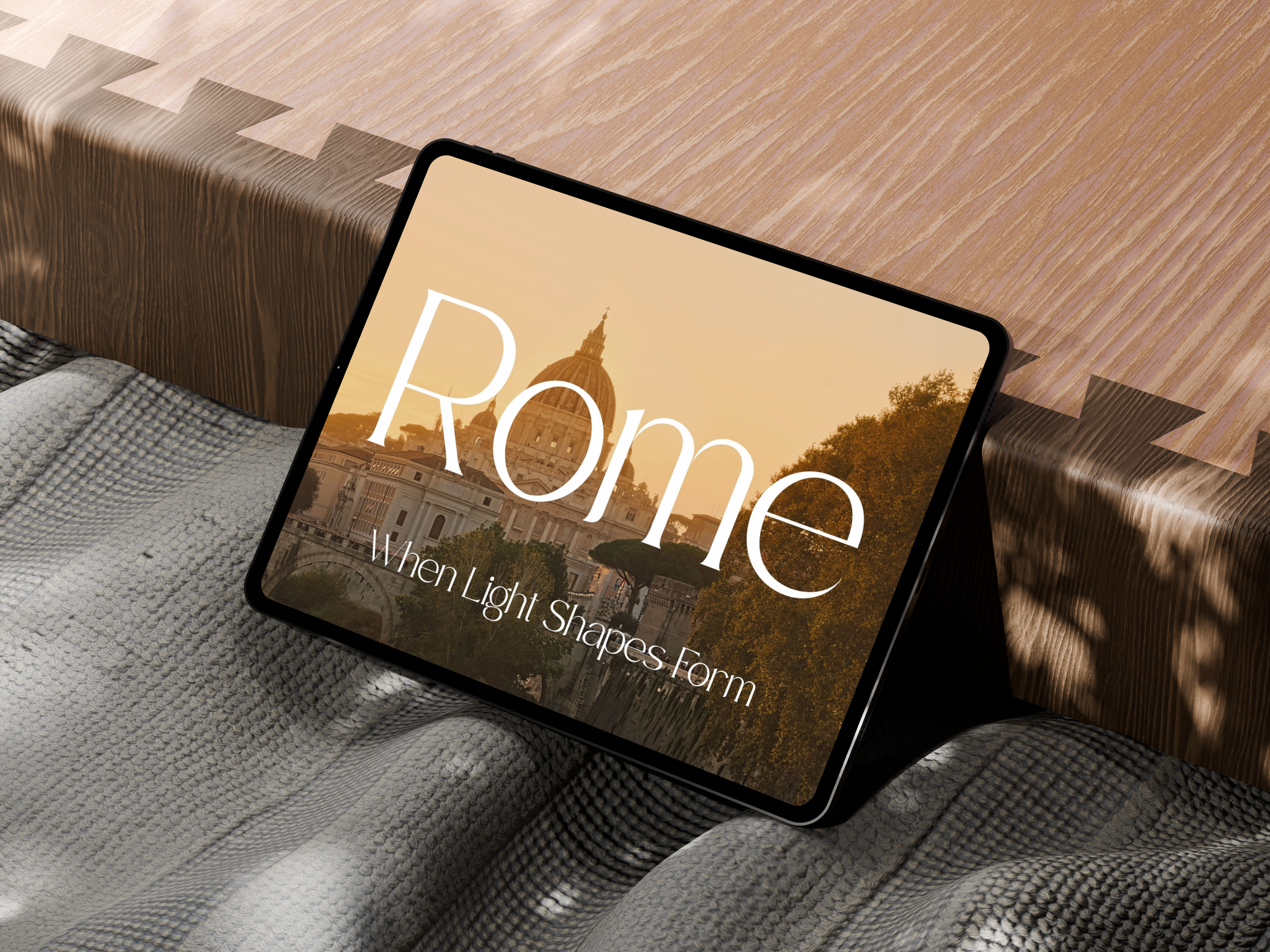
Rome — When Light Shapes Form 


Find the book on Amazon


Order