Eduardo Bartoli Photography
Portfolios
Projects
The Book
Rome — When Light Shapes Form
Journal
Rome’s Hidden Gem: Hadrian’s Villa, the Largest Villa Ever Built
Prints
About
Contact
Florence in Black & White — Fine Art Photography Noir
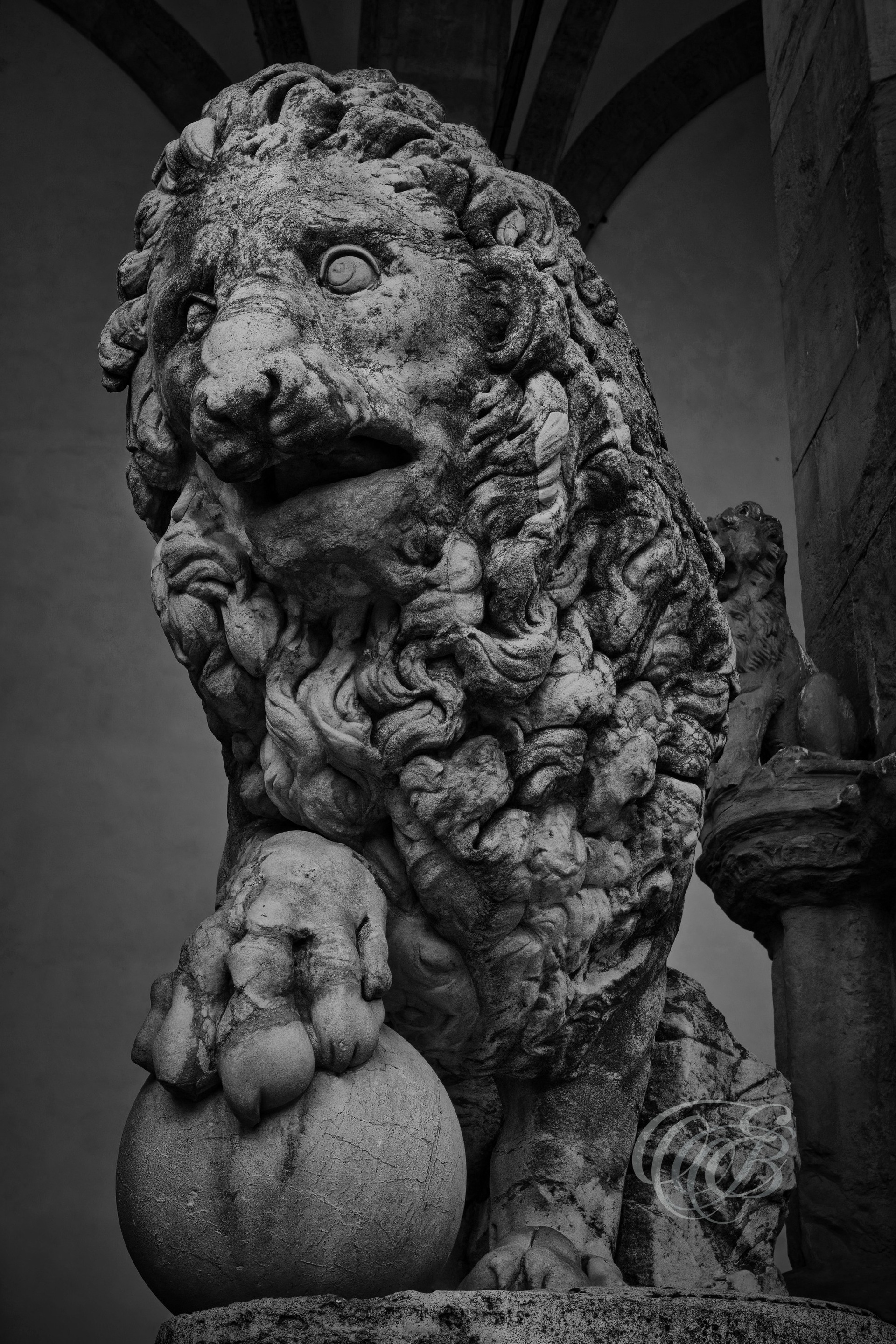
At the Loggia dei Lanzi, an ancient lion sculpture associated with the Medici legacy stands within a space defined by open Renaissance arches and sculptural continuity, where public art and civic architecture merge into a single historical setting in Florence’s Piazza della Signoria. The black and white rendering emphasizes surface texture, patina, and the spatial depth created by the arcade structure behind it. Eduardo Bartoli Photography.
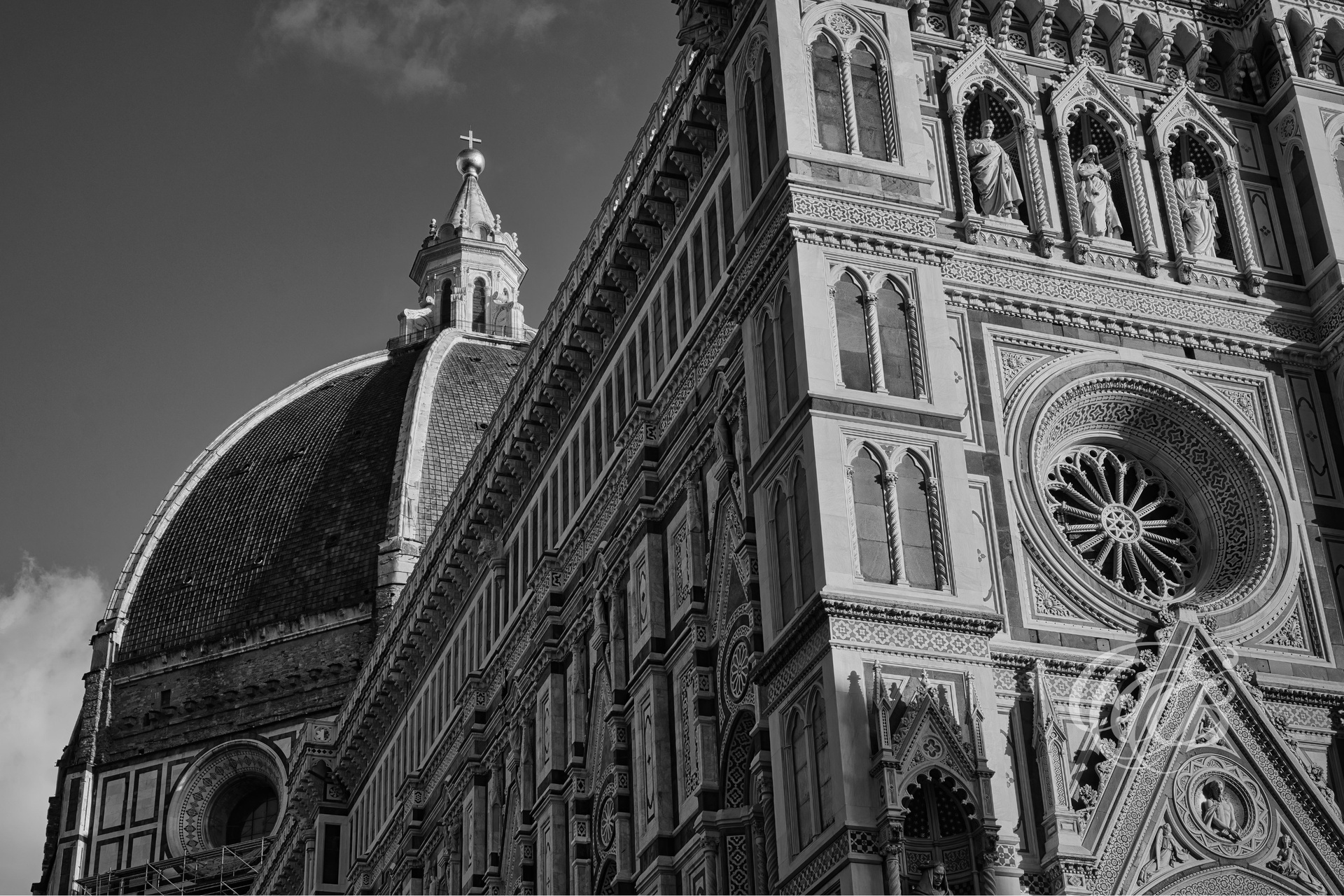
The Cathedral of Santa Maria del Fiore stands as one of the defining achievements of Renaissance architecture, begun in 1296 under Arnolfo di Cambio and later crowned by Filippo Brunelleschi’s dome in the 15th century. Its layered construction reflects centuries of artistic and engineering evolution at the heart of the city. The black and white treatment emphasizes structure, geometry, and surface detail. Eduardo Bartoli Photography.
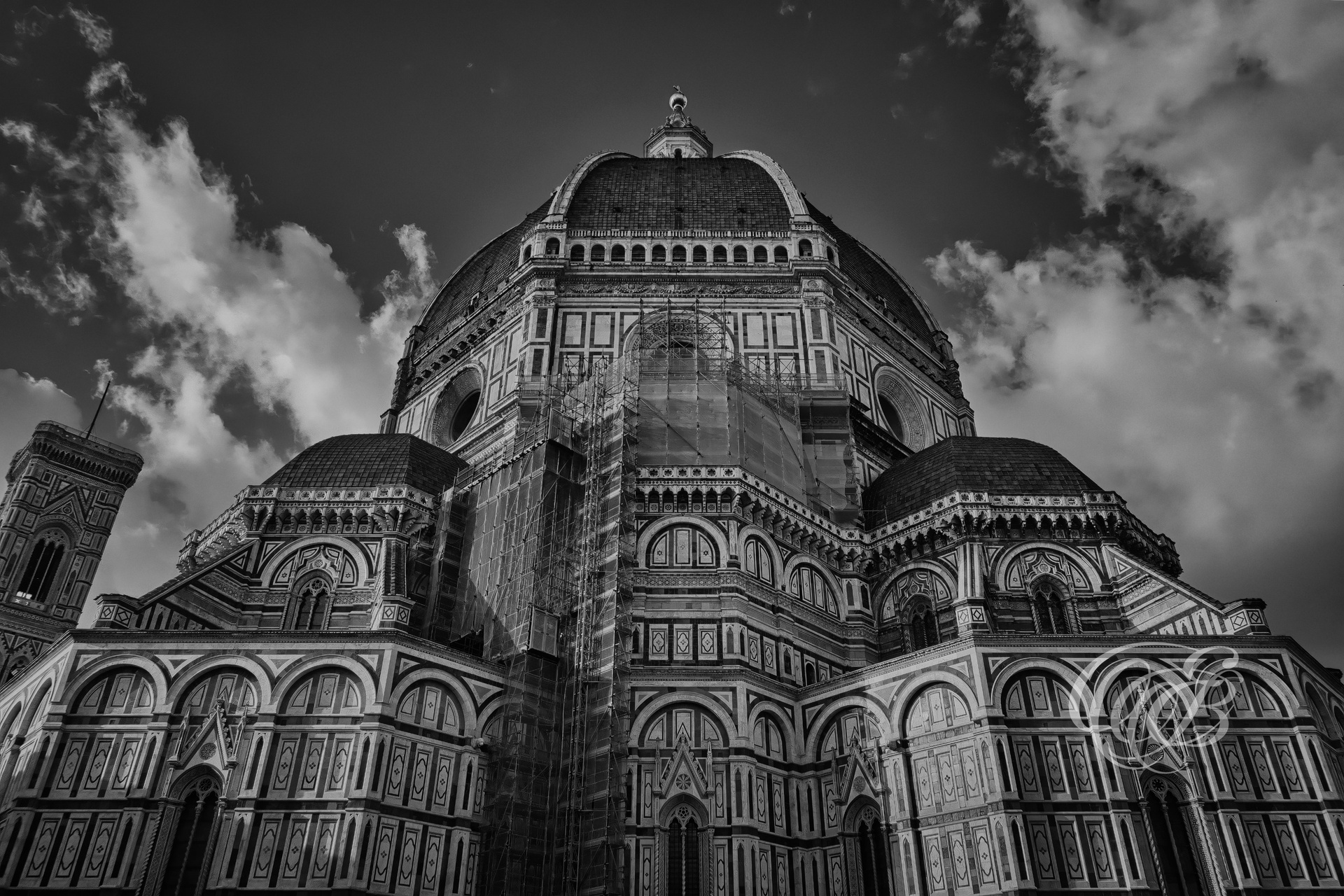
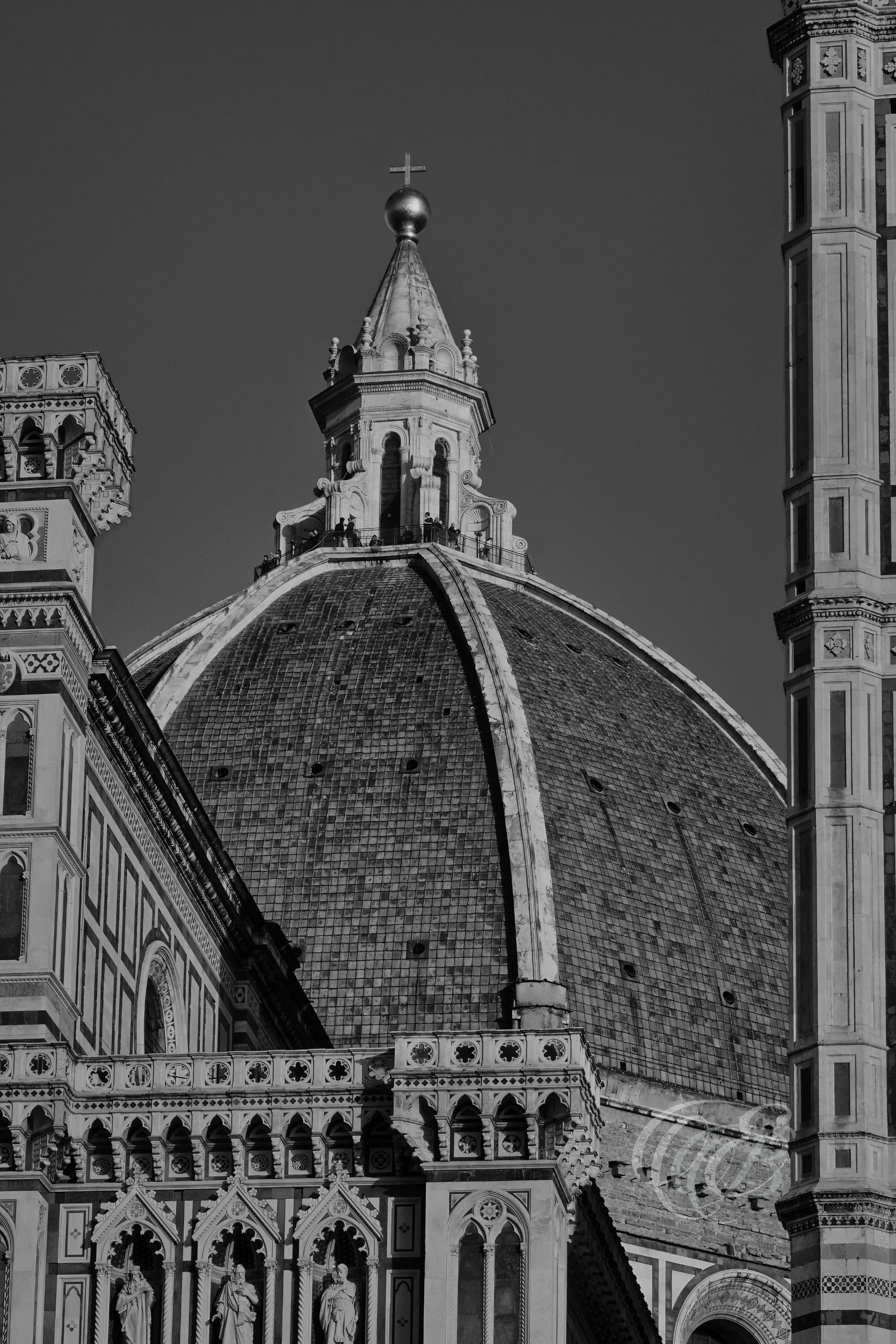
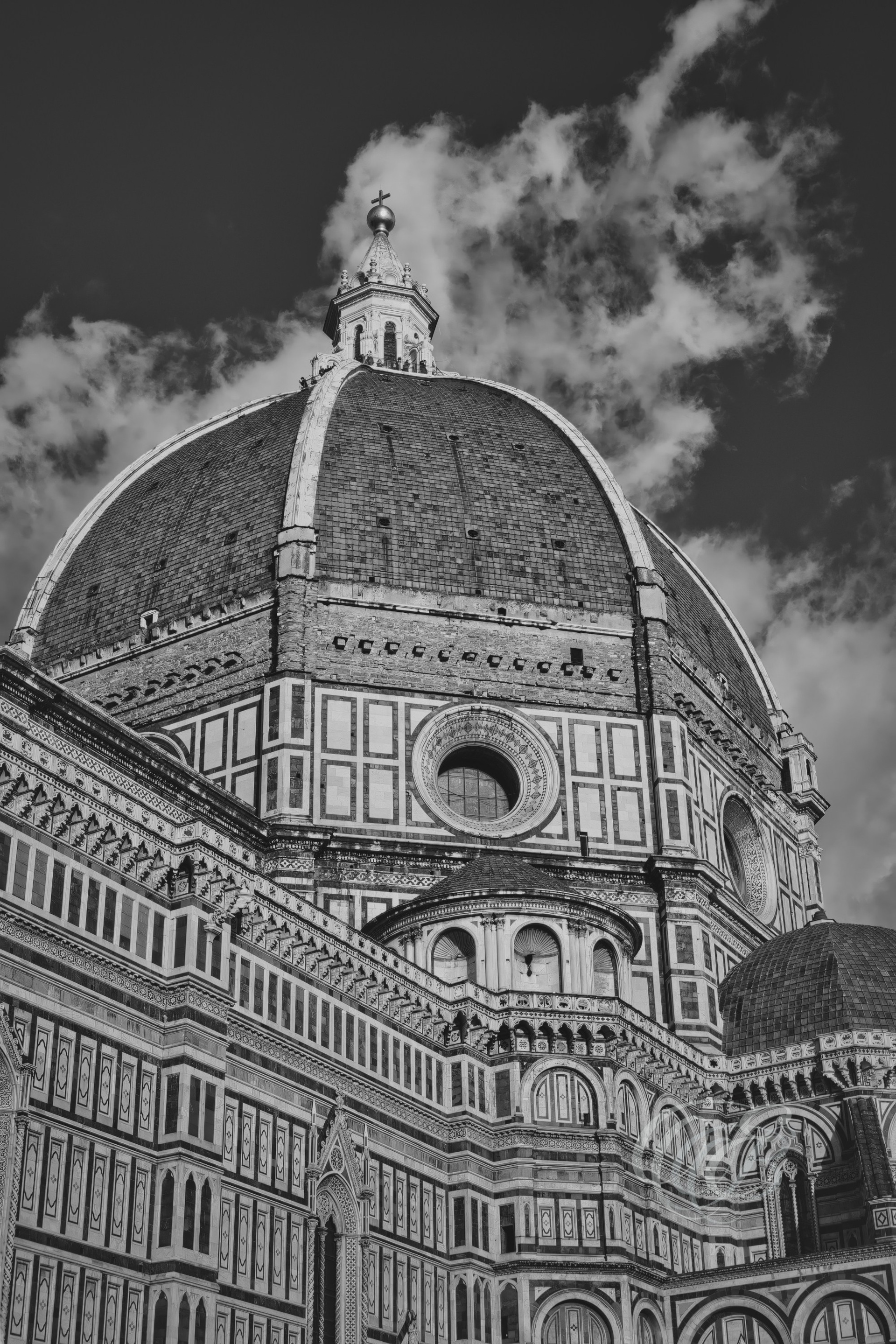
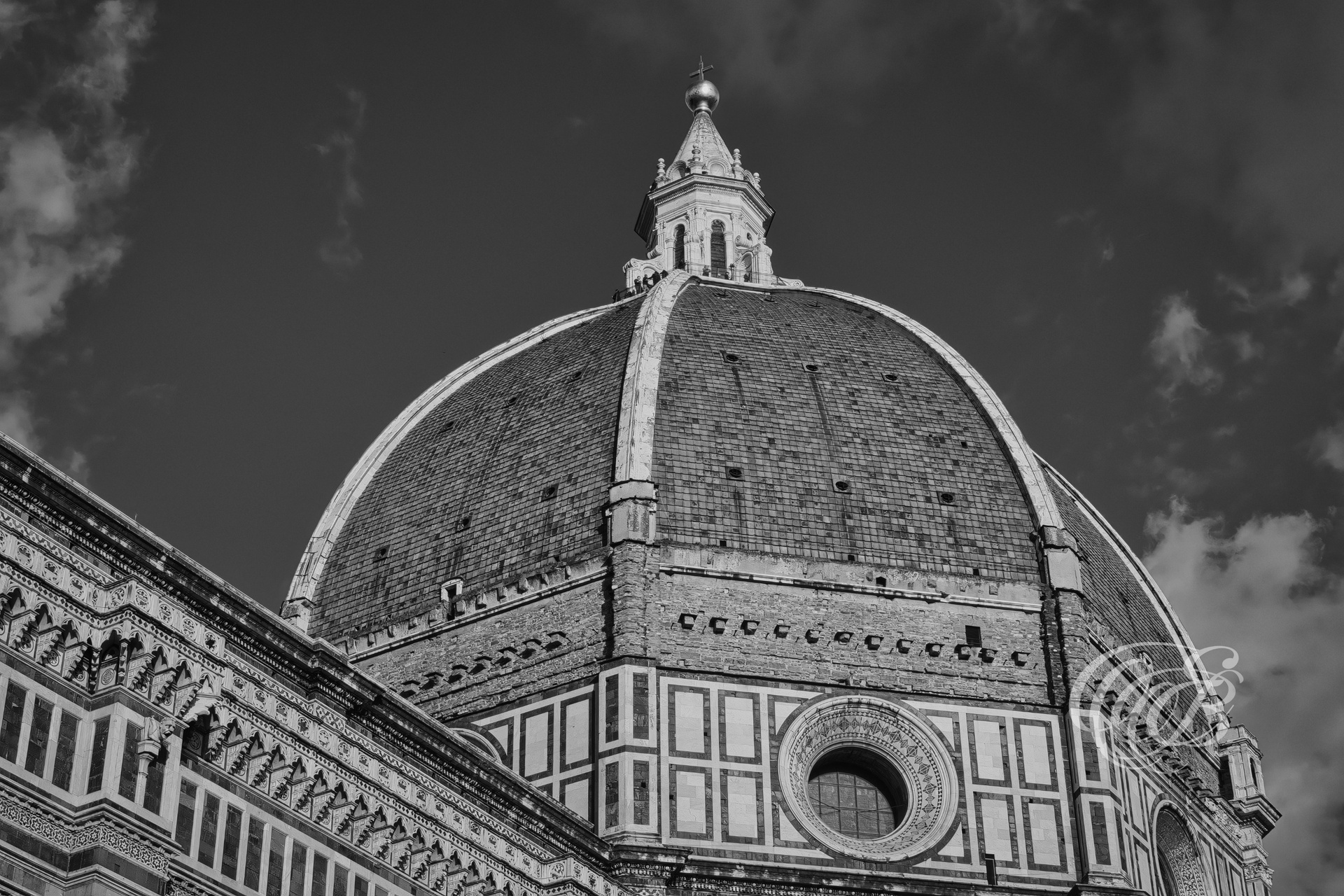
The Dome of Santa Maria del Fiore rises above Florence as a defining achievement of Renaissance architecture, designed by Filippo Brunelleschi in the 15th century as part of the city’s cathedral complex. Its vast masonry structure and innovative engineering mark a turning point in architectural history. The black and white treatment emphasizes scale, curvature, and detail against the skyline. Eduardo Bartoli Photography.
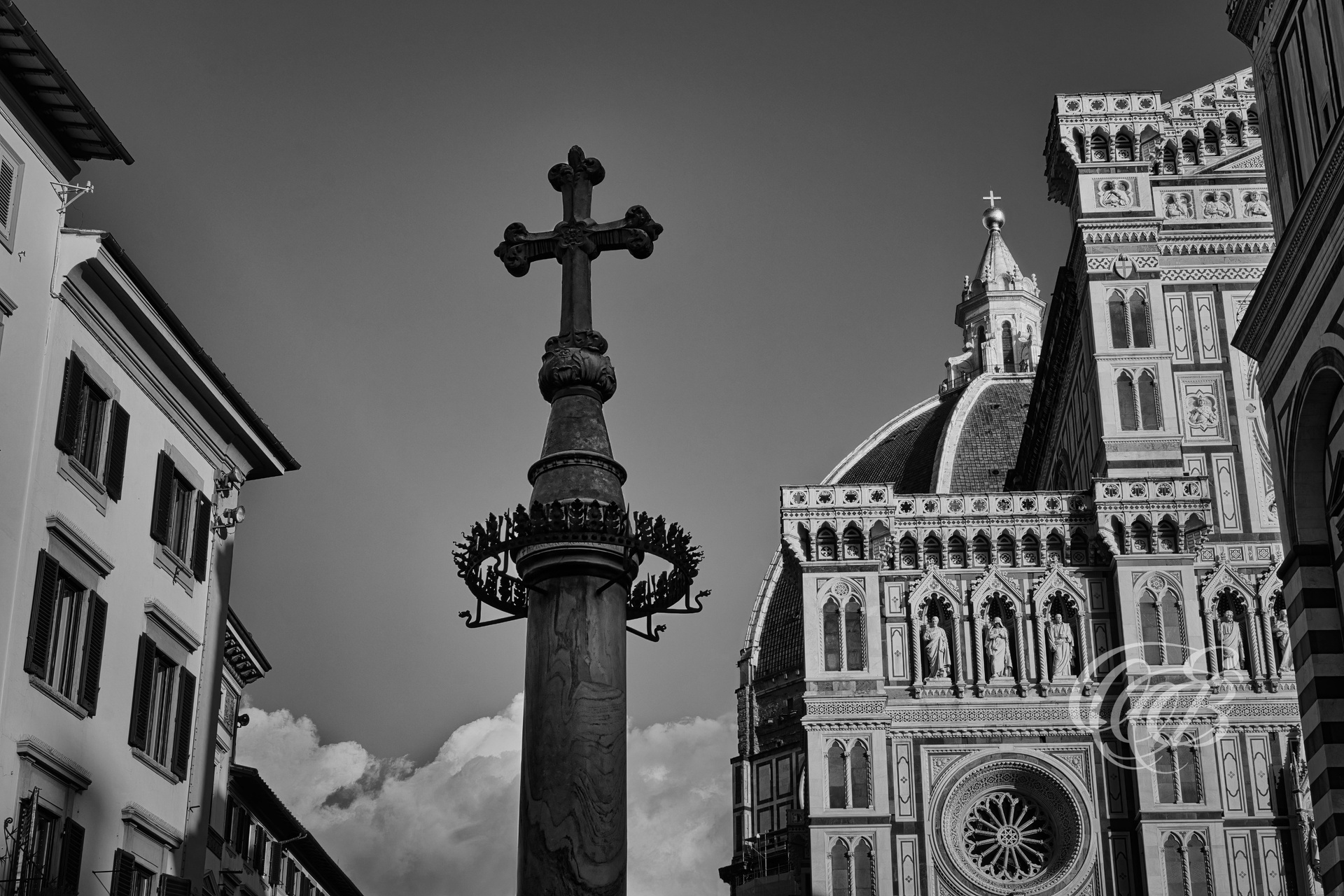
At Piazza di San Giovanni, a freestanding cross aligns within the architectural field of Florence’s historic center, where the Cathedral of Santa Maria del Fiore rises behind it as part of a layered sacred urban landscape shaped across centuries. The black and white rendering distills the scene into structure, contrast, and spatial relationship between foreground and monumental background. Eduardo Bartoli Photography.
Verrocchio’s Golden Ball crowns the lantern of Brunelleschi’s dome at Florence Cathedral and has been a distinctive element of the city’s skyline since its installation in 1471. Created in the workshop of Andrea del Verrocchio, the gilded sphere reflects the technical innovation and artistic ambition that defined Renaissance Florence. Presented in black and white, the photograph shifts attention toward form, scale, and the architectural presence of this historic landmark, offering a different perspective on one of the cathedral’s most recognizable details. Eduardo Bartoli Photography.
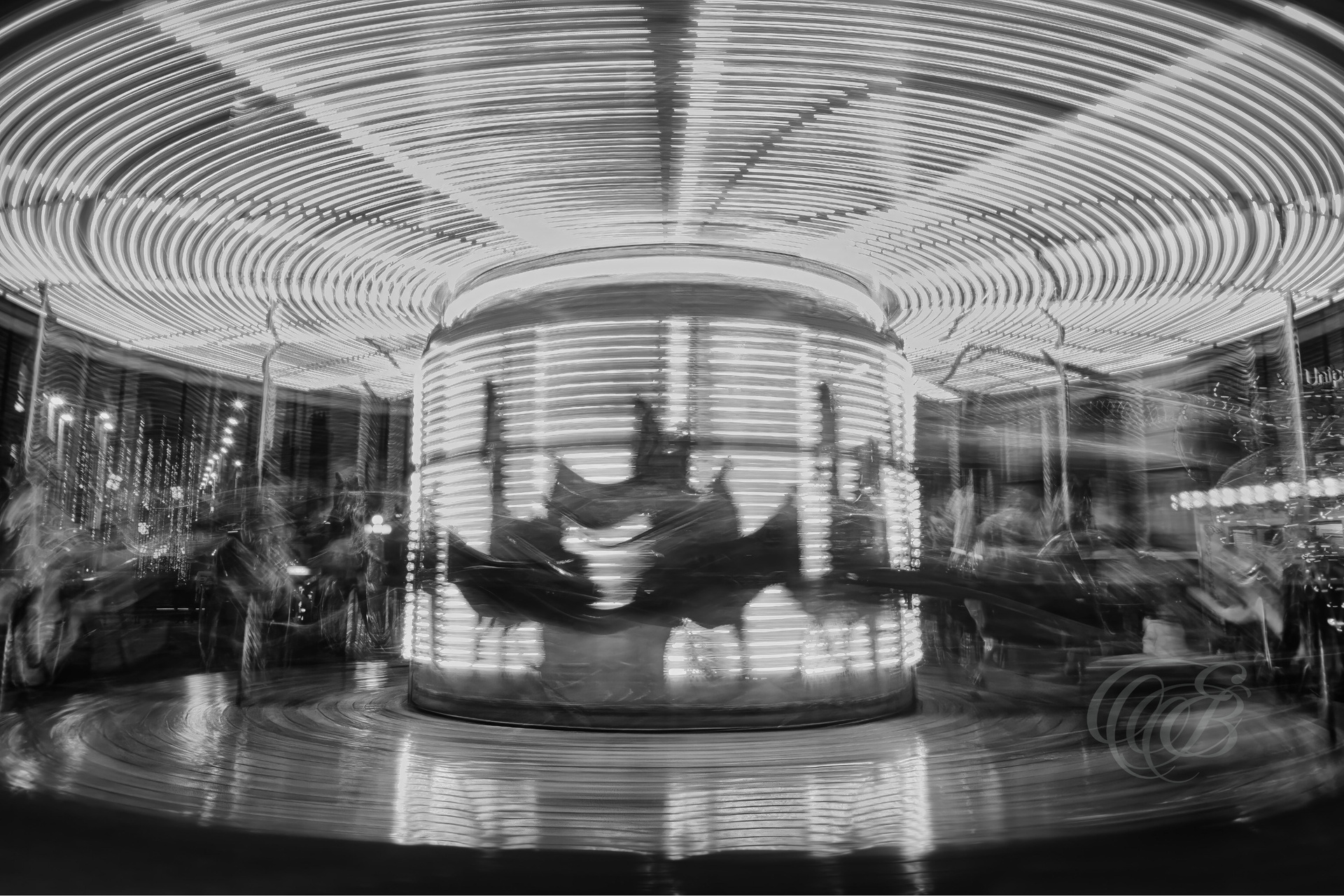
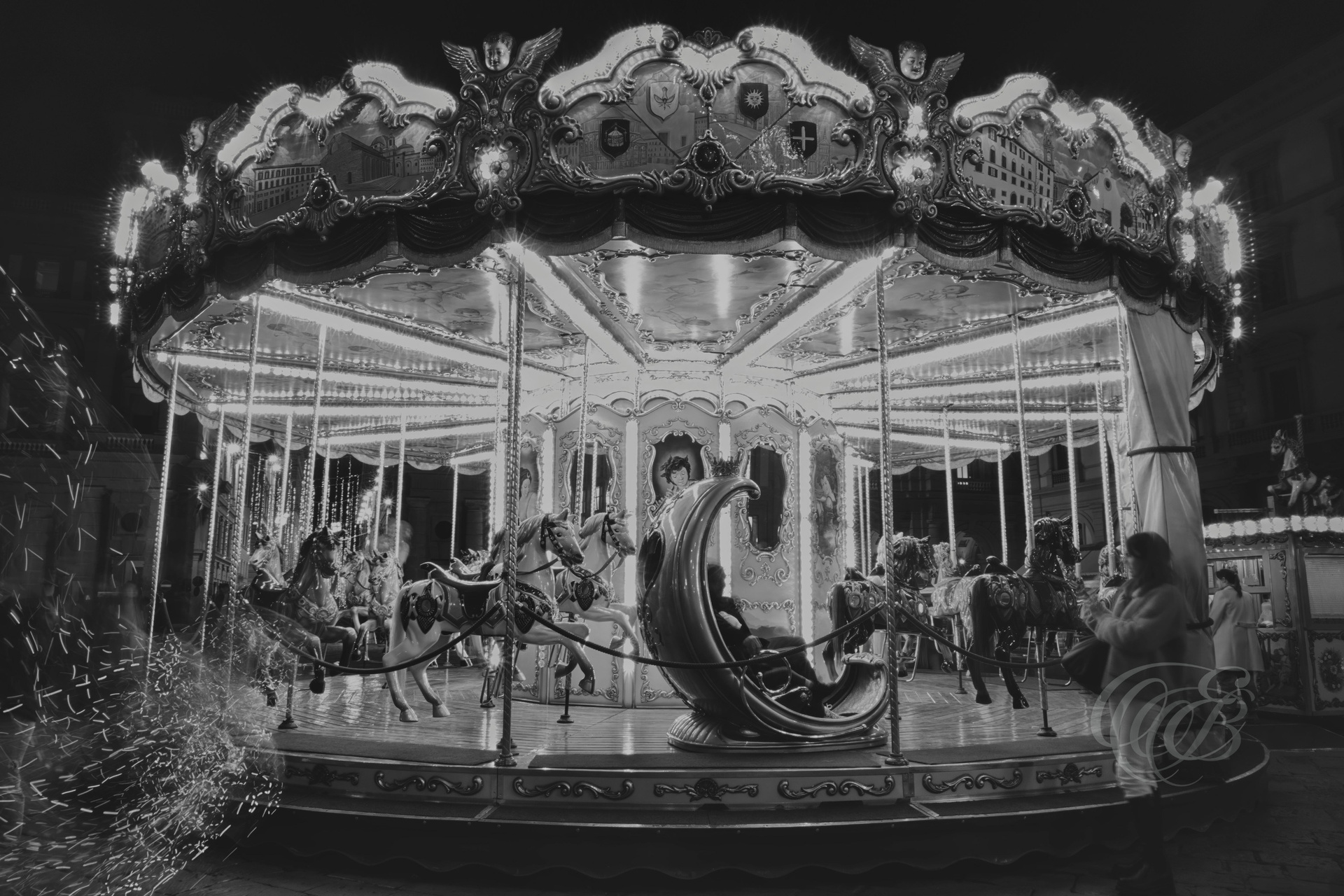
The carousel in Piazza della Repubblica occupies a square that was extensively redesigned during Florence’s nineteenth-century urban renewal, creating one of the city’s principal gathering places. Long exposure photography transforms the movement of the carousel into flowing forms and tonal transitions, creating a visual contrast with the enduring architecture that surrounds it. The monochrome treatment reinforces this dialogue between motion and permanence, offering a distinctive perspective on everyday life within Florence’s historic center. Eduardo Bartoli Photography.
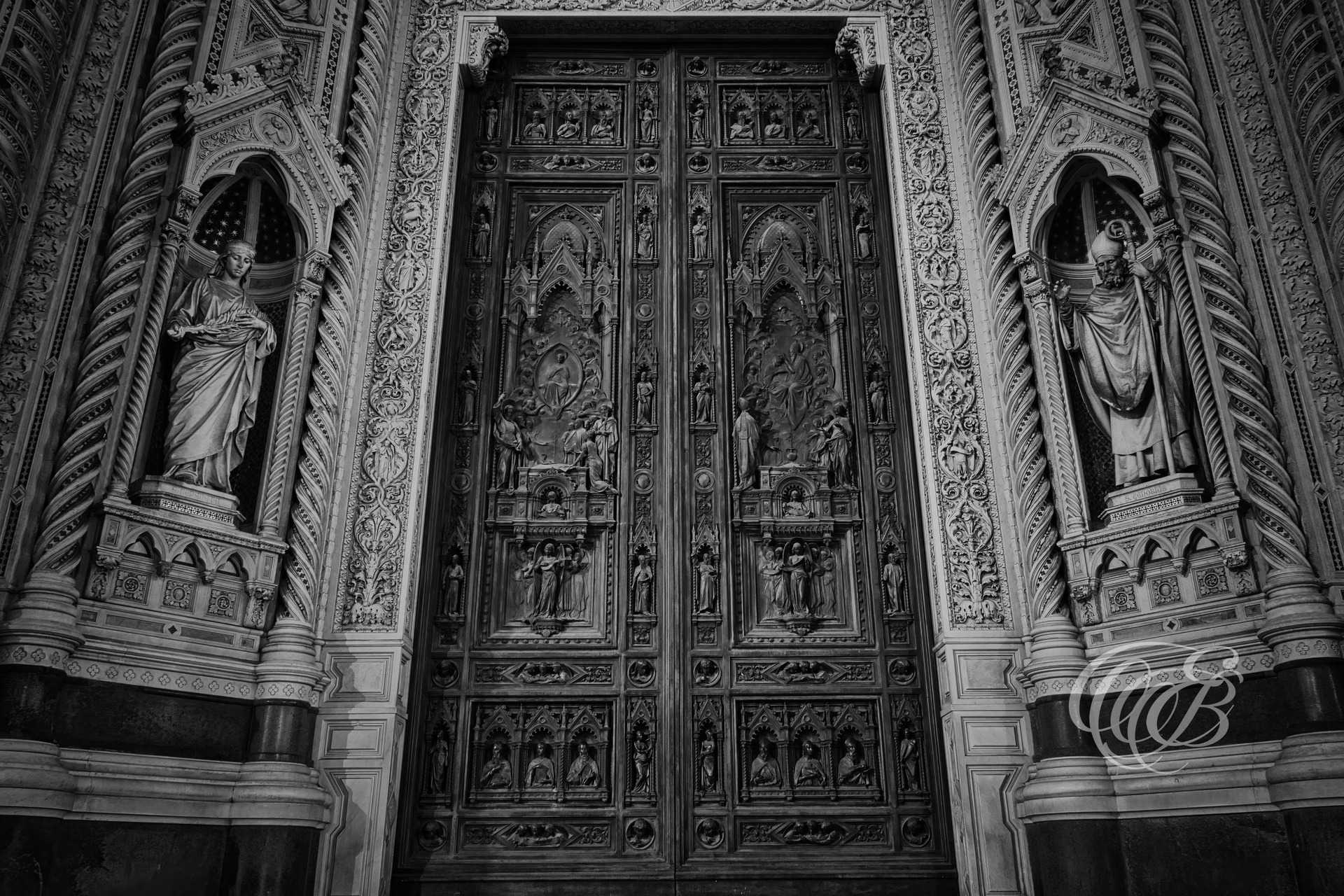
The ornate doors of the Cathedral of Santa Maria del Fiore form part of Florence’s long tradition of sacred craftsmanship, where sculptural reliefs and architectural design merge into a unified expression of religious and artistic identity. The black and white treatment brings forward texture, depth, and the carved detail embedded in the metalwork. Eduardo Bartoli Photography.
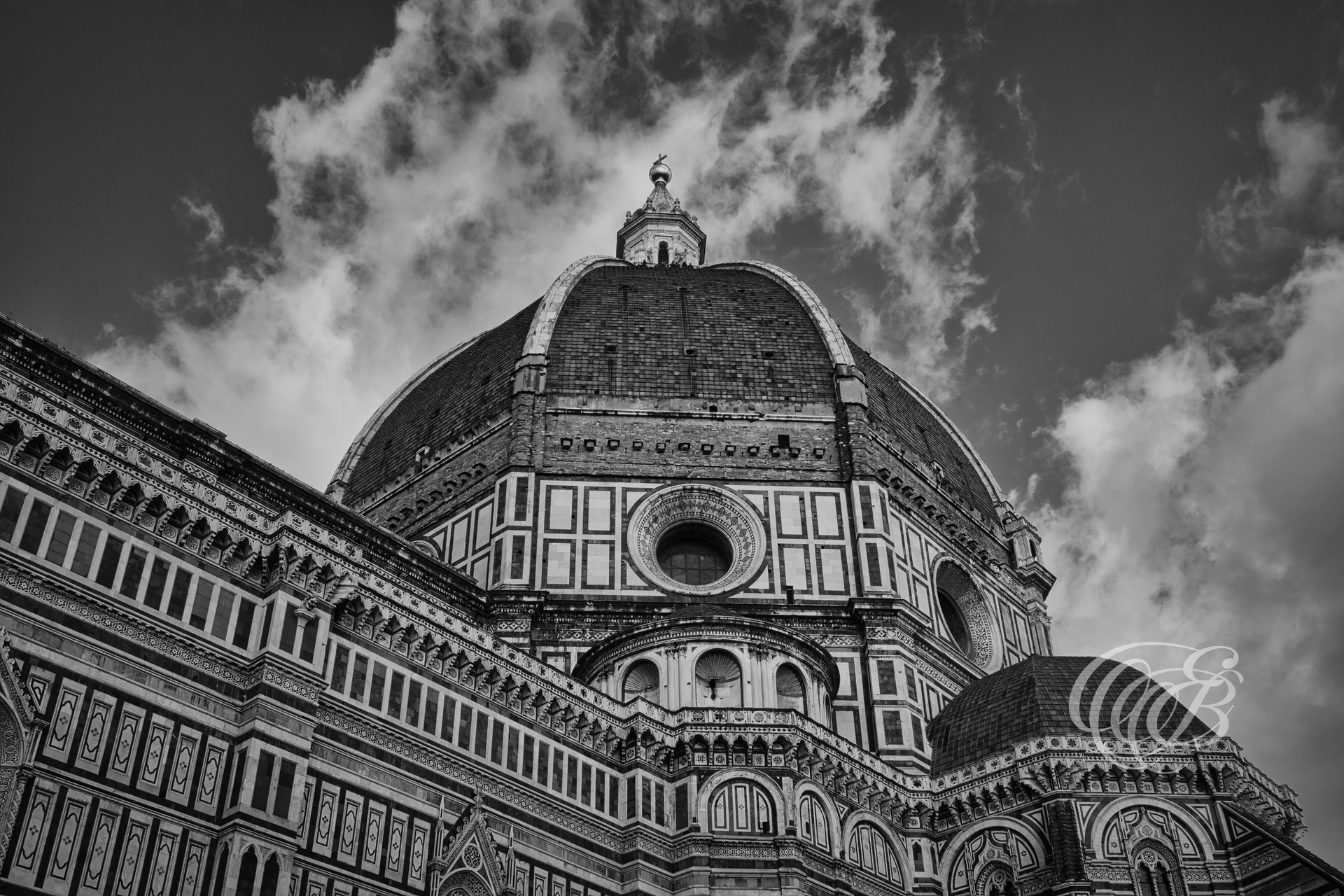
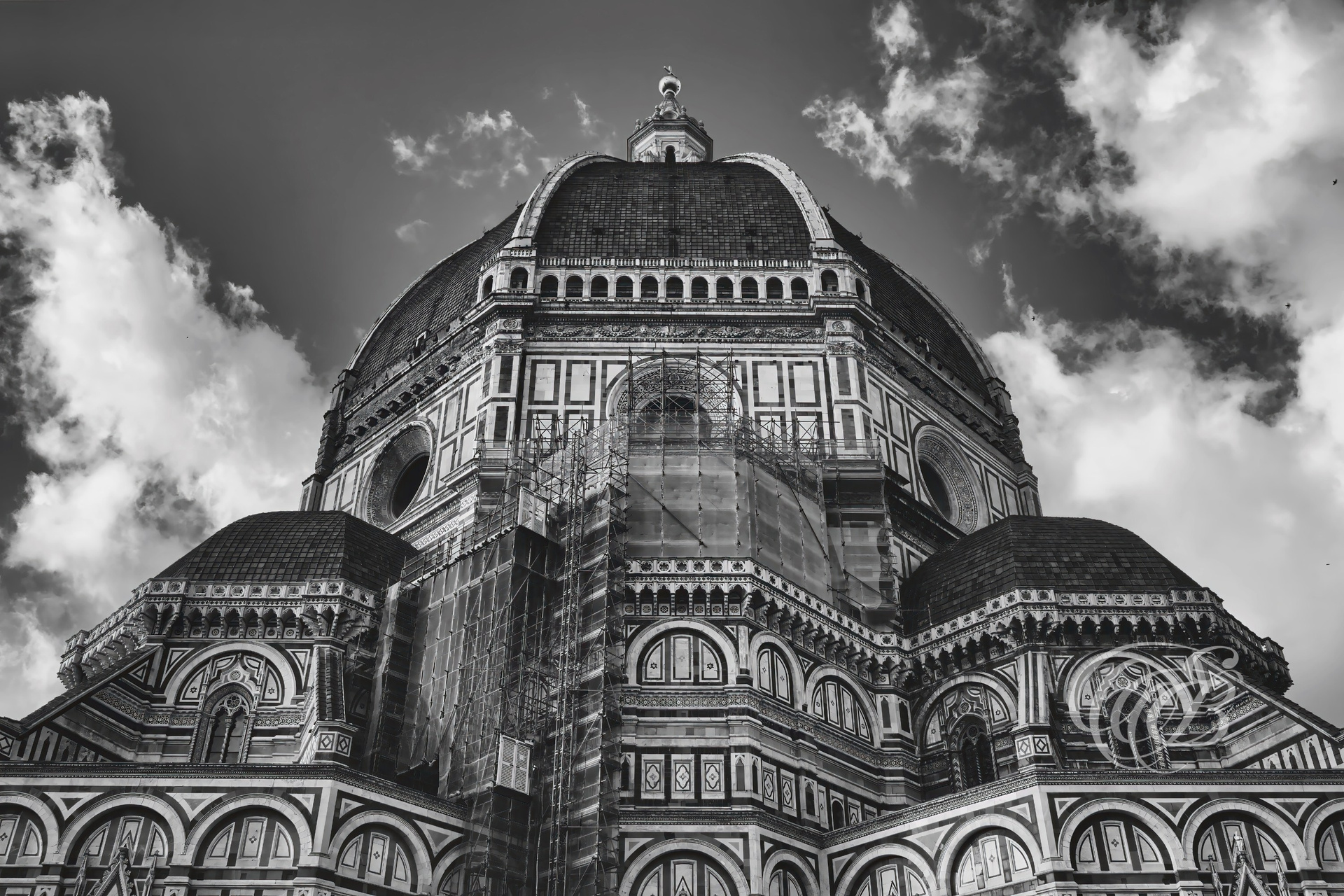
Brunelleschi’s Dome rises above Florence as a defining achievement of Renaissance engineering, completed in the 15th century as part of the Cathedral of Santa Maria del Fiore and designed by Filippo Brunelleschi. Its vast masonry structure and innovative double-shell construction mark a turning point in architectural history. The black and white treatment emphasizes curvature, scale, and structural geometry against the sky. Eduardo Bartoli Photography.
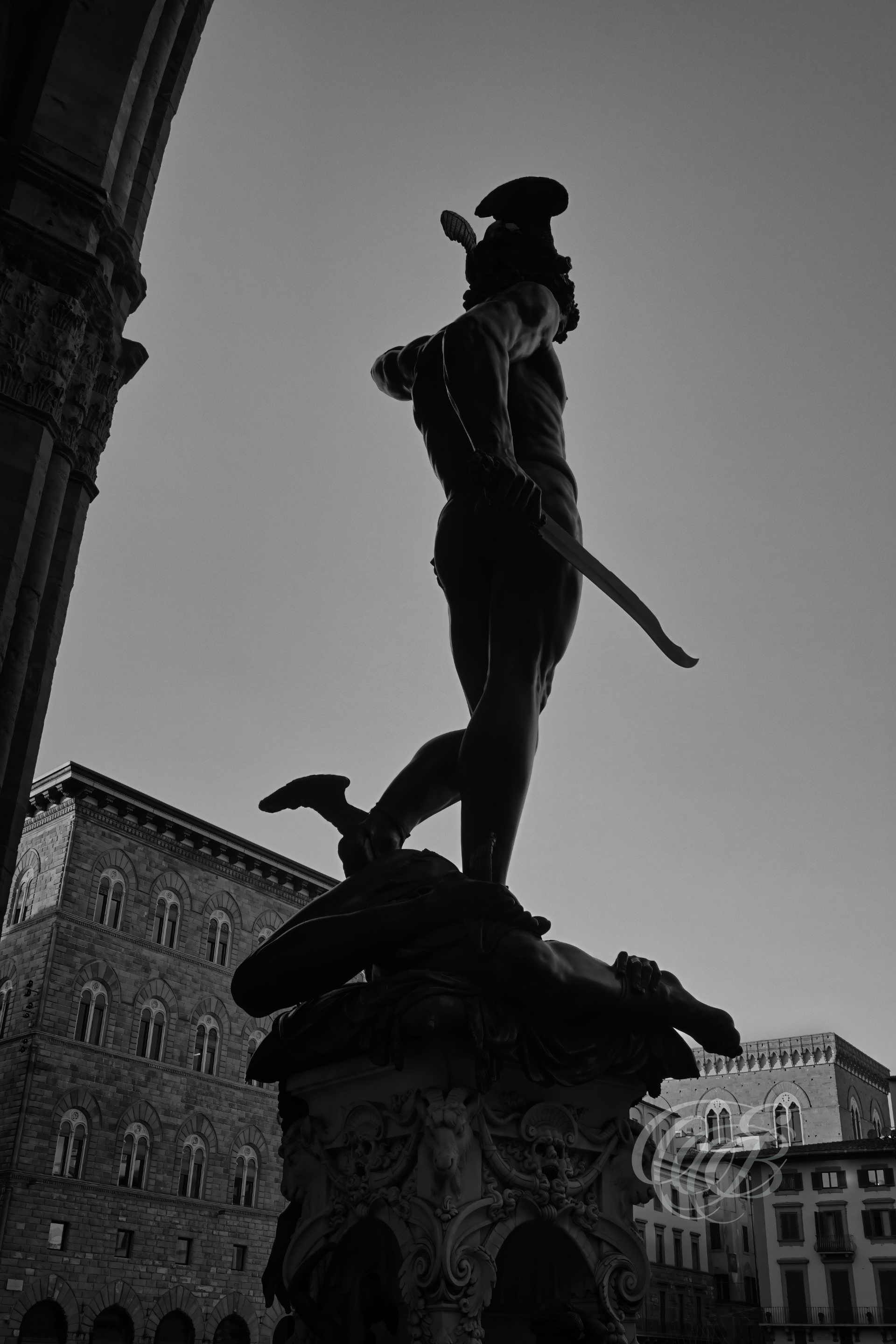
Perseus with the Head of Medusa was created by Benvenuto Cellini between 1545 and 1554 and remains one of the most celebrated sculptures in Florence’s Piazza della Signoria. Commissioned by Cosimo I de’ Medici, the bronze work exemplifies the technical mastery and artistic confidence of the Renaissance. In this monochrome interpretation, attention is drawn to the sculpture’s expressive forms and dramatic presence, highlighting qualities that have captivated visitors for centuries beneath the Loggia dei Lanzi. Eduardo Bartoli Photography.
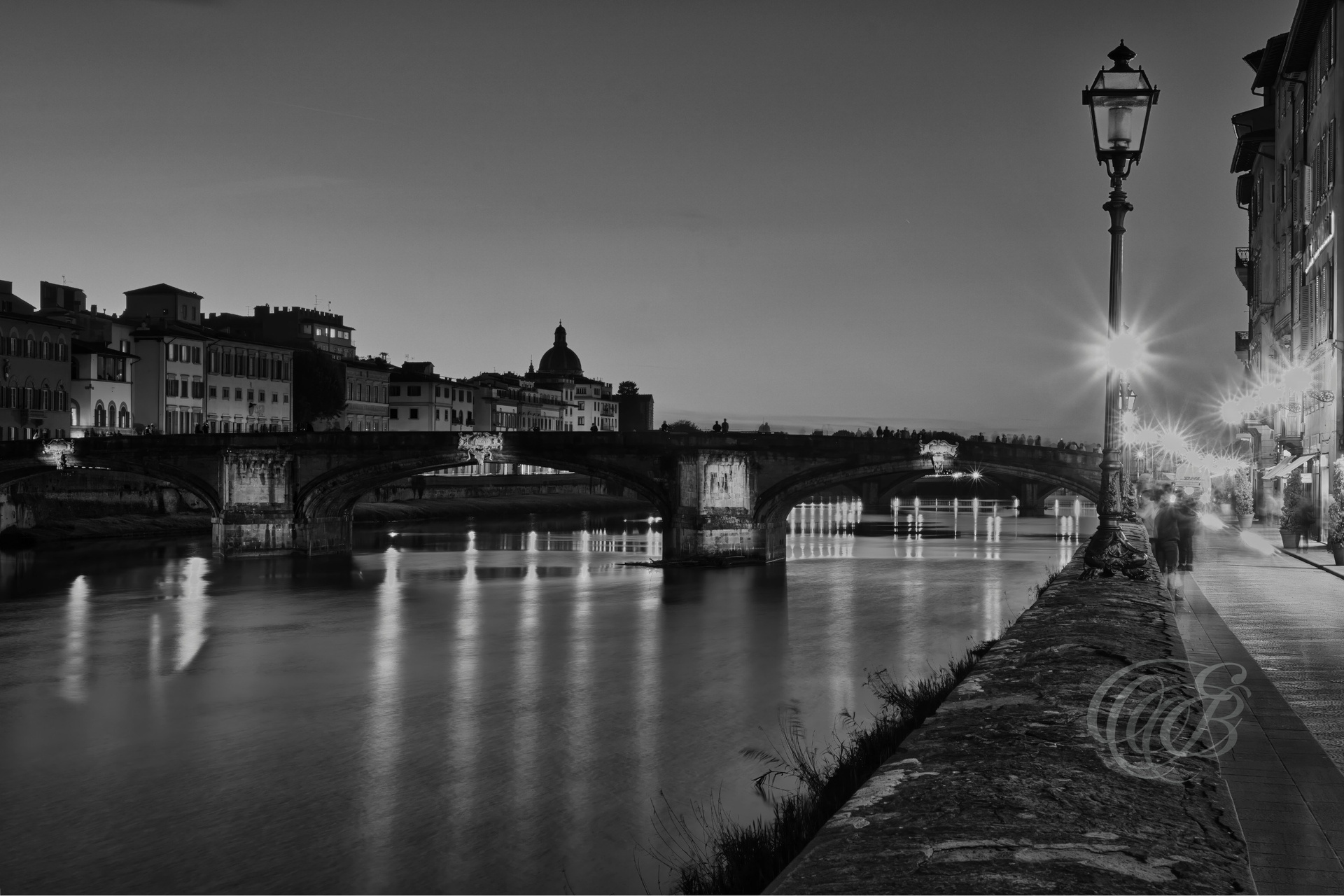
Ponte Santa Trinita crosses the Arno River as one of Florence’s most elegant Renaissance bridges, originally designed by Bartolomeo Ammannati in the 16th century. Renowned for its distinctive elliptical arches, the bridge connects centuries of architectural history while offering one of the city's most recognizable riverfront views. The black and white treatment emphasizes its graceful geometry, structural balance, and relationship with the surrounding urban landscape. Eduardo Bartoli Photography.
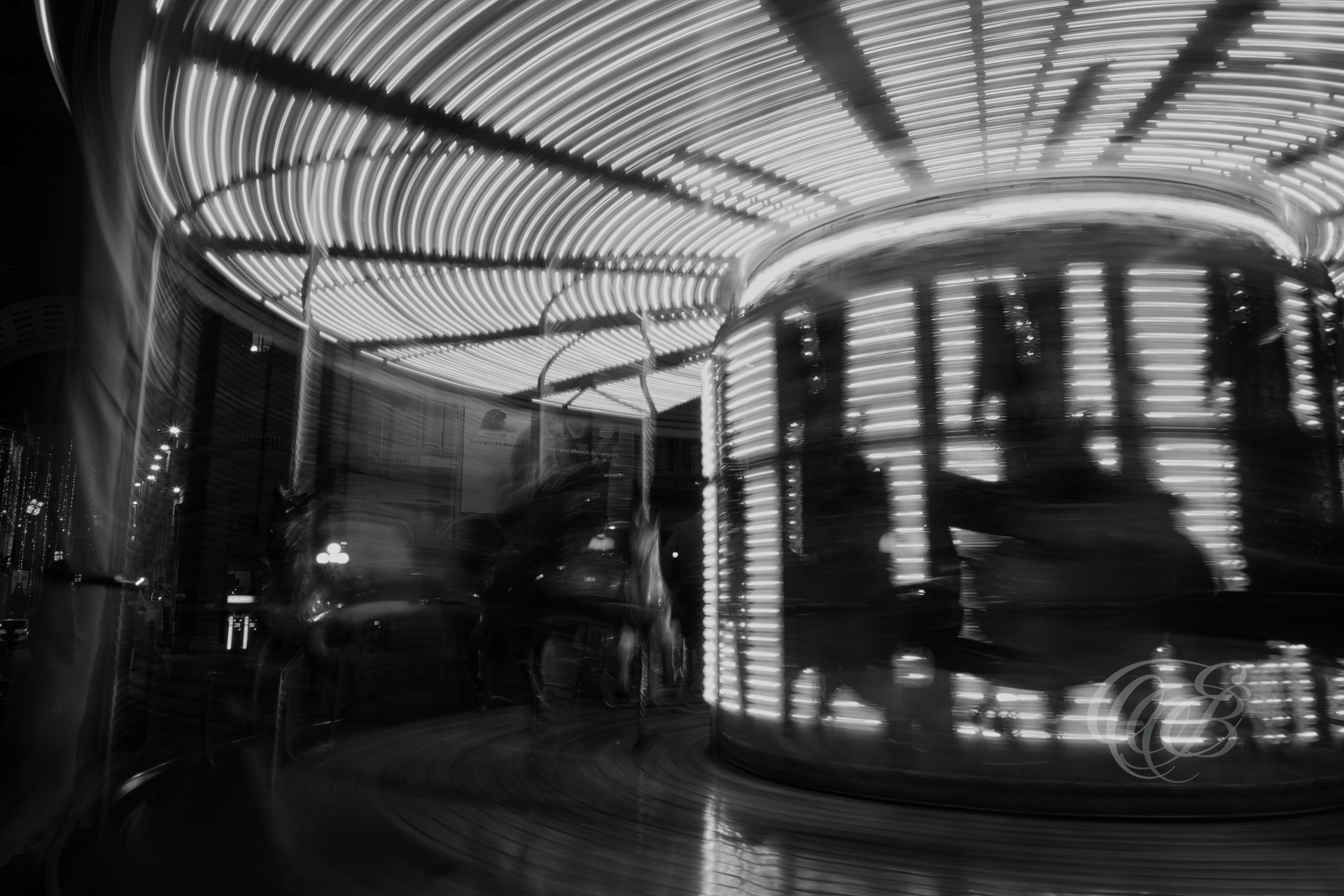
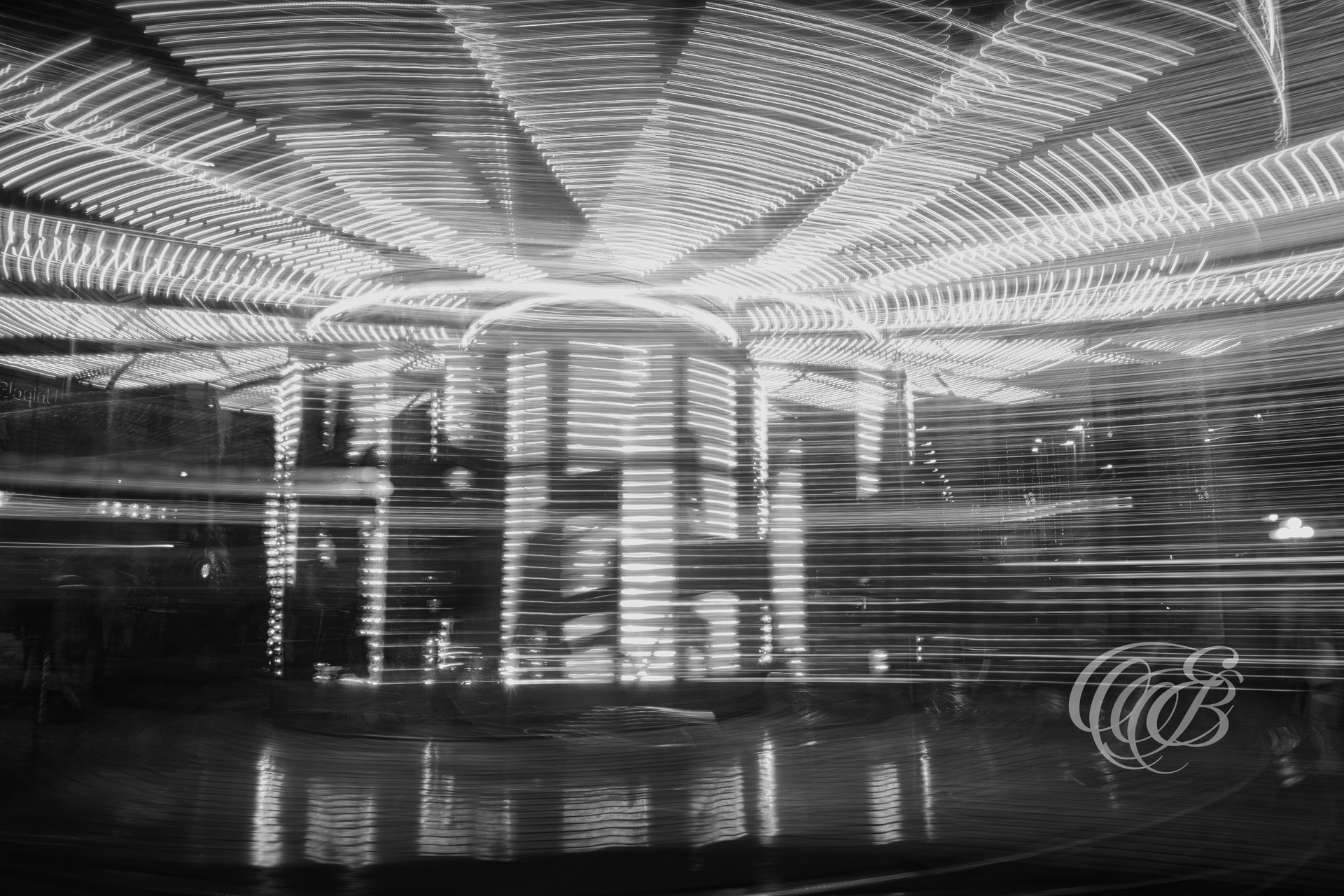
Inside the historic center of Florence, a moving carousel becomes an abstract study of motion and light, where form dissolves into rhythm and blurred structure within the urban space. The black and white treatment reduces the scene to movement, contrast, and atmosphere. Eduardo Bartoli Photography.
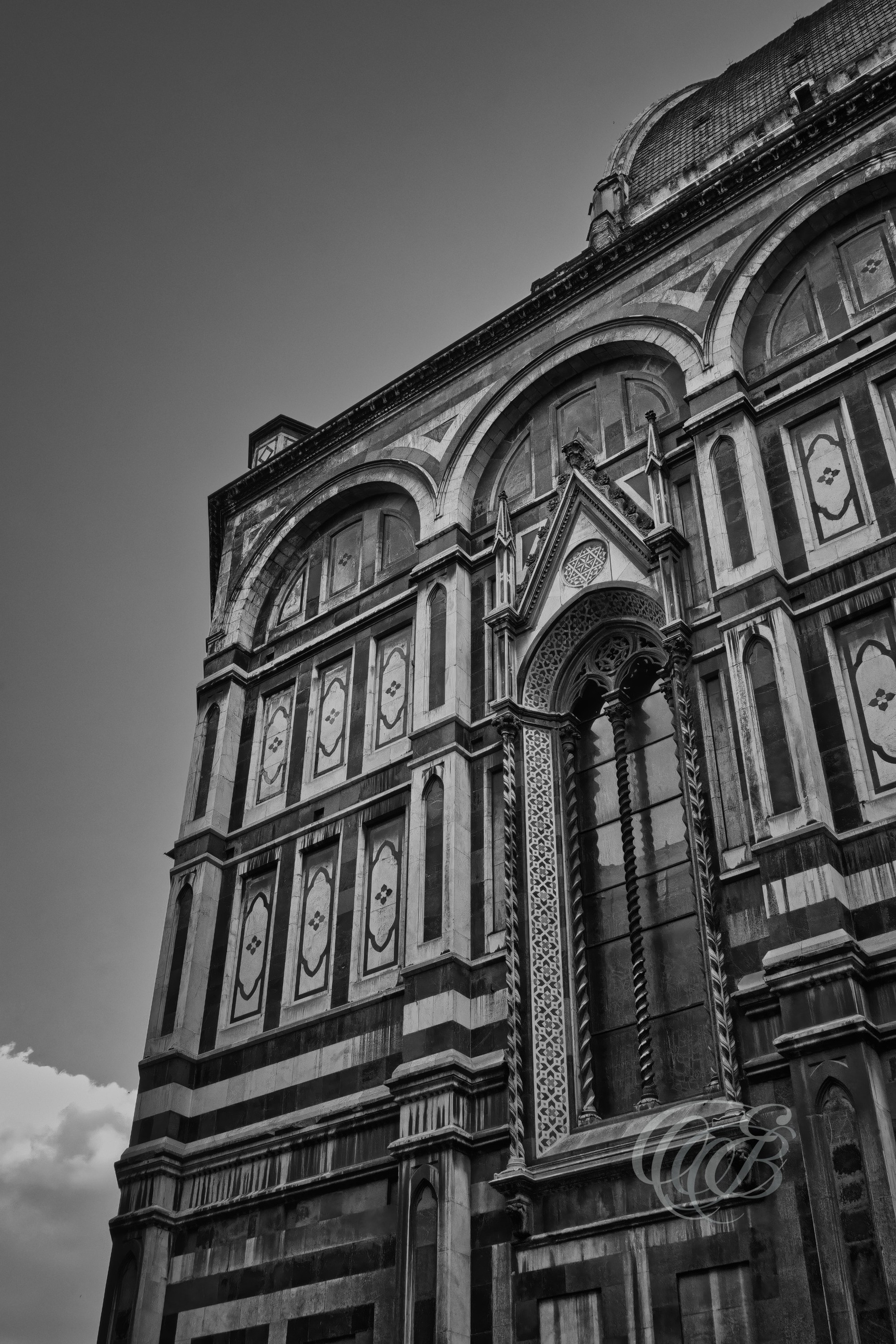
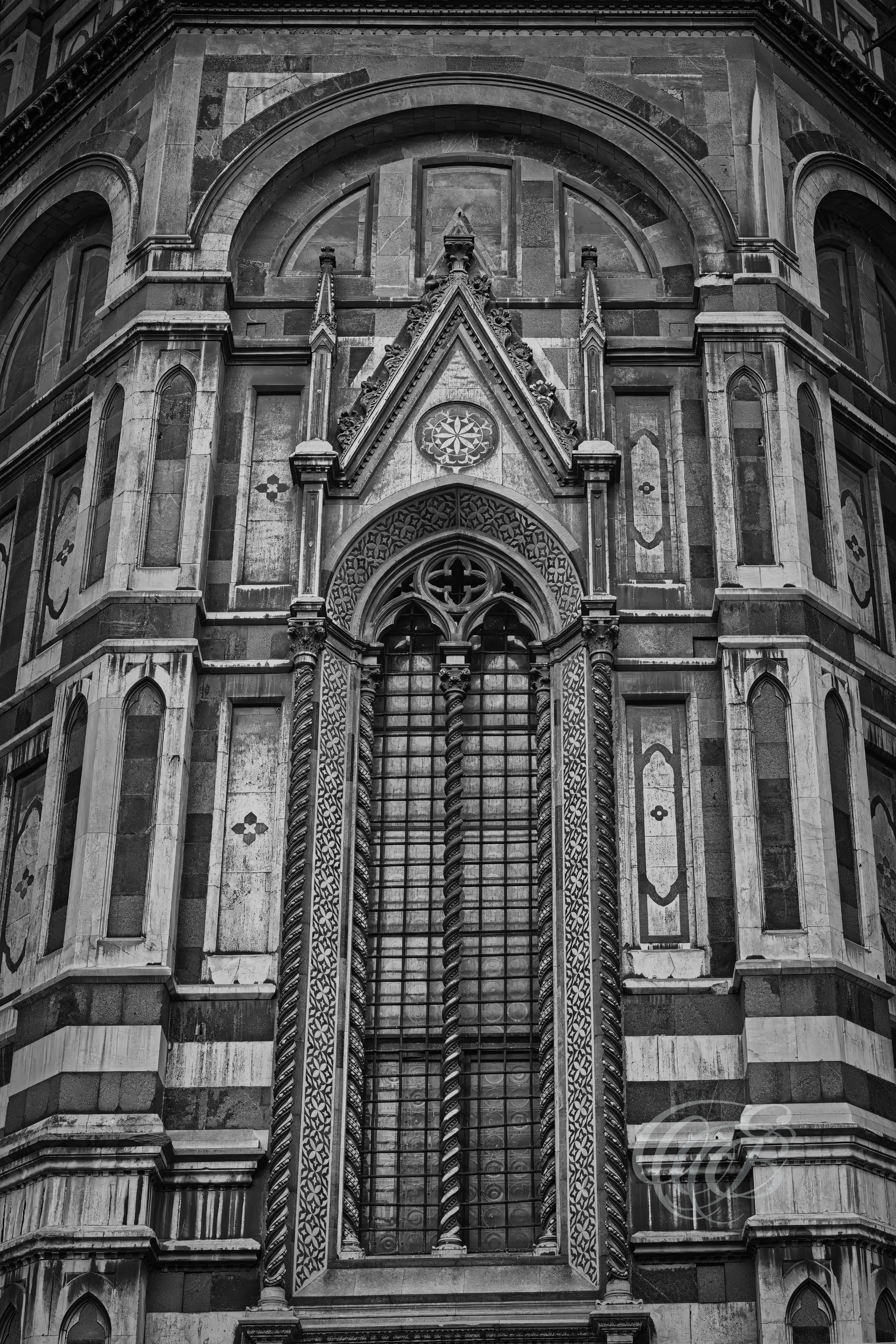
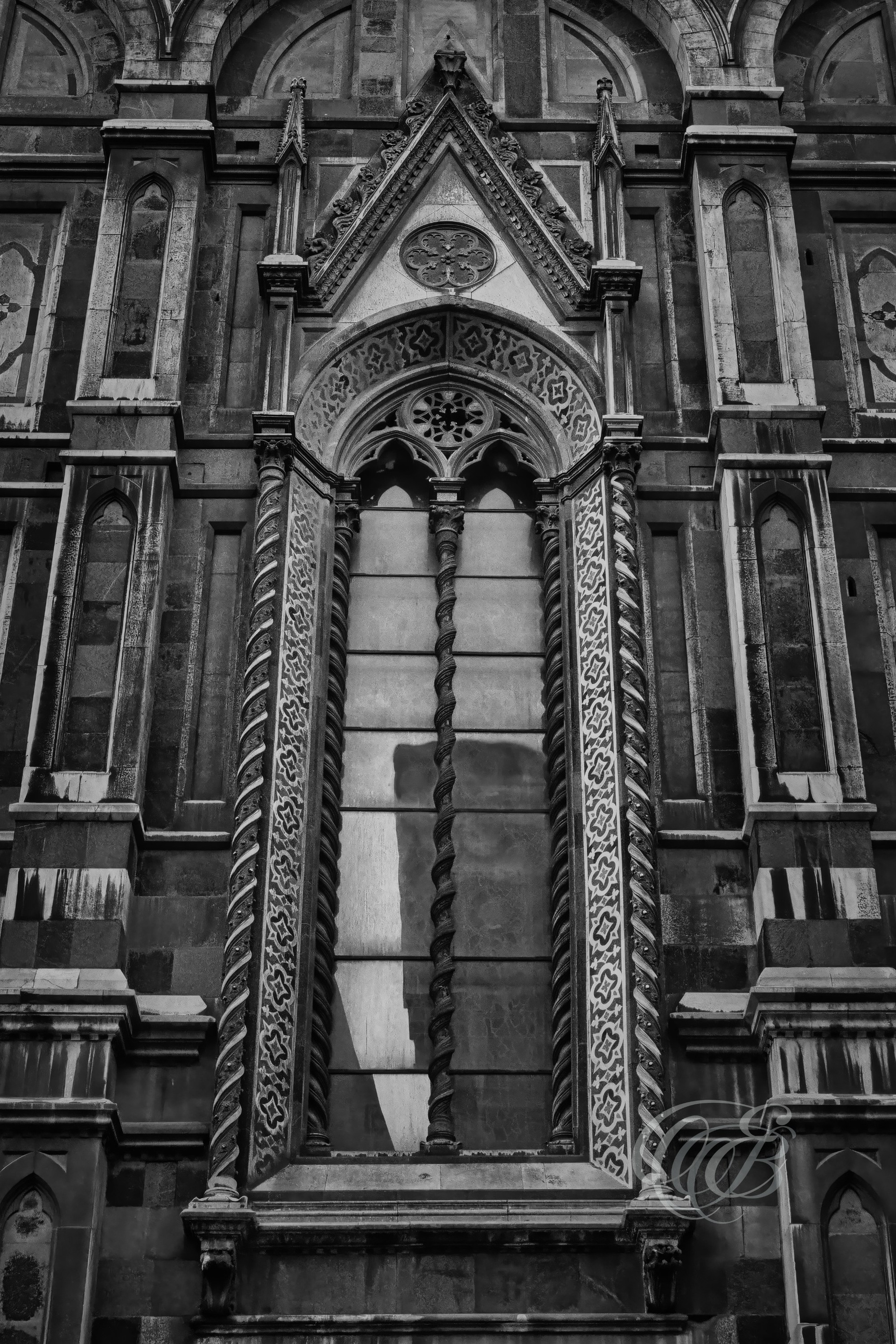
Photographed from a corner angle, this black and white image captures the striking details of the Cathedral of Santa Maria del Fiore’s side facade in Florence. One of the cathedral’s ornate Gothic windows stands out prominently, with part of the open sky offering a visual contrast to the stonework. The interplay of light and shadow enhances the depth and elegance of the historic architecture.
Brunelleschi’s Dome rises above Florence Cathedral as a defining work of 15th-century Renaissance engineering, designed by Filippo Brunelleschi as a structural solution that transformed architectural history. The matte black and white treatment emphasizes curvature, scale, and geometric precision against the sky. Eduardo Bartoli Photography.
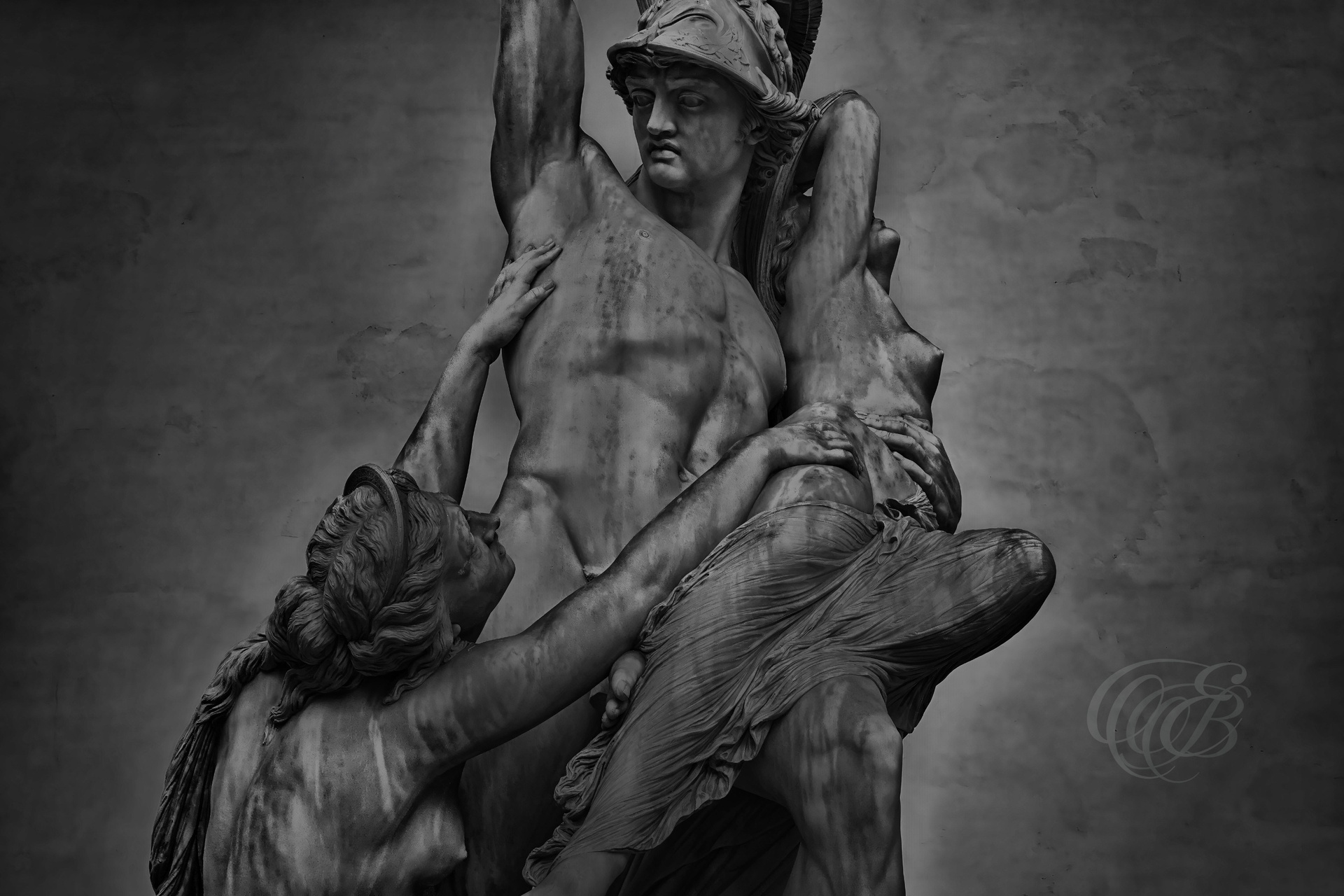
The Rape of Polyxena is a marble sculpture by Pio Fedi, completed in 1865 and displayed beneath the Loggia dei Lanzi in Florence’s Piazza della Signoria. Inspired by episodes from Greek mythology, the work is renowned for its intricate composition and the sense of movement achieved within a single block of marble. The grayscale palette accentuates the interplay of light across the sculpted surfaces, drawing attention to the craftsmanship and expressive qualities that define one of Florence’s notable nineteenth-century monuments. Eduardo Bartoli Photography.
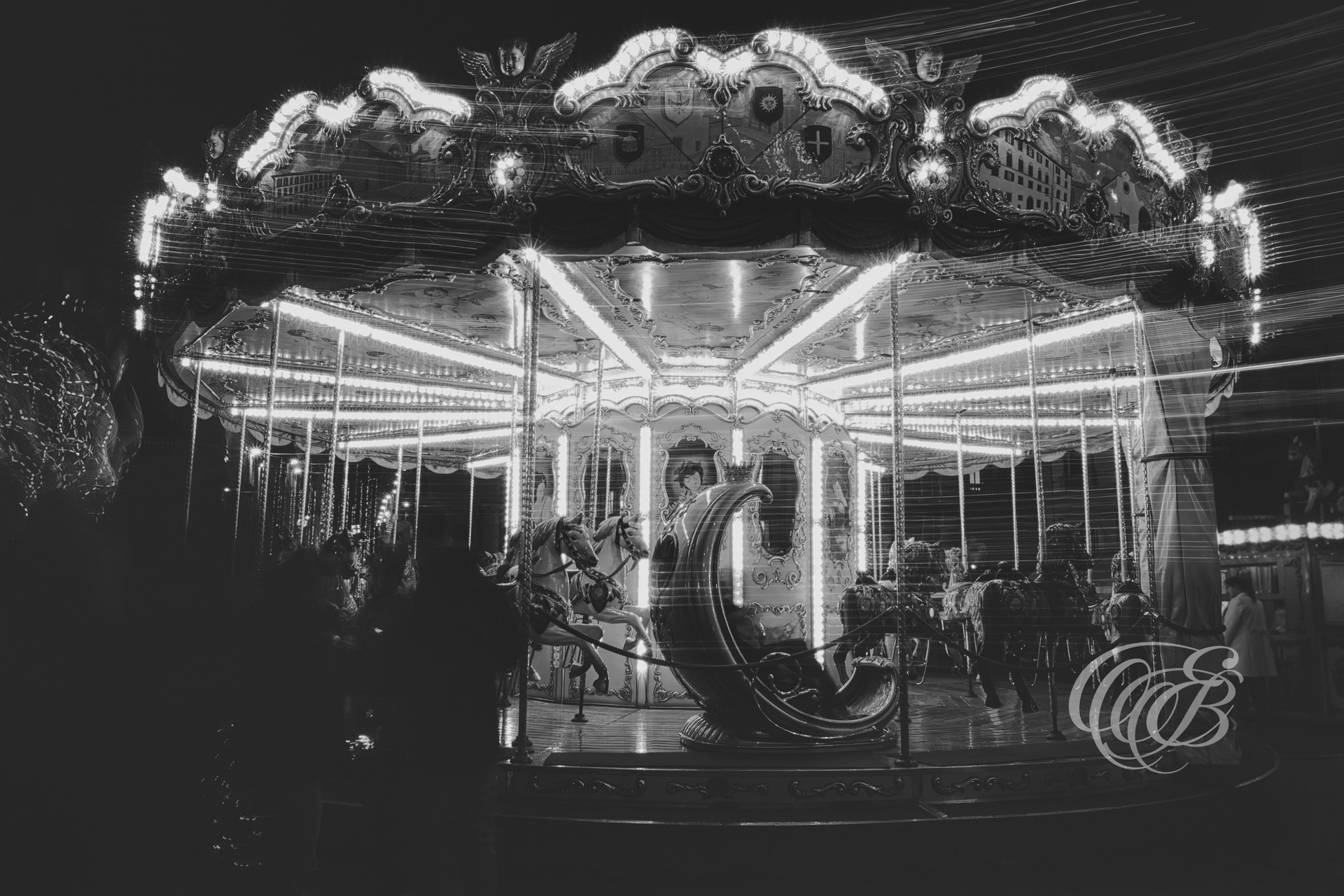
A carousel in Florence is transformed through long exposure into abstract patterns of motion and light, where movement becomes form and structure dissolves into rhythm within the urban night environment. The black and white treatment emphasizes contrast, flow, and the transient nature of light across time. Eduardo Bartoli Photography.
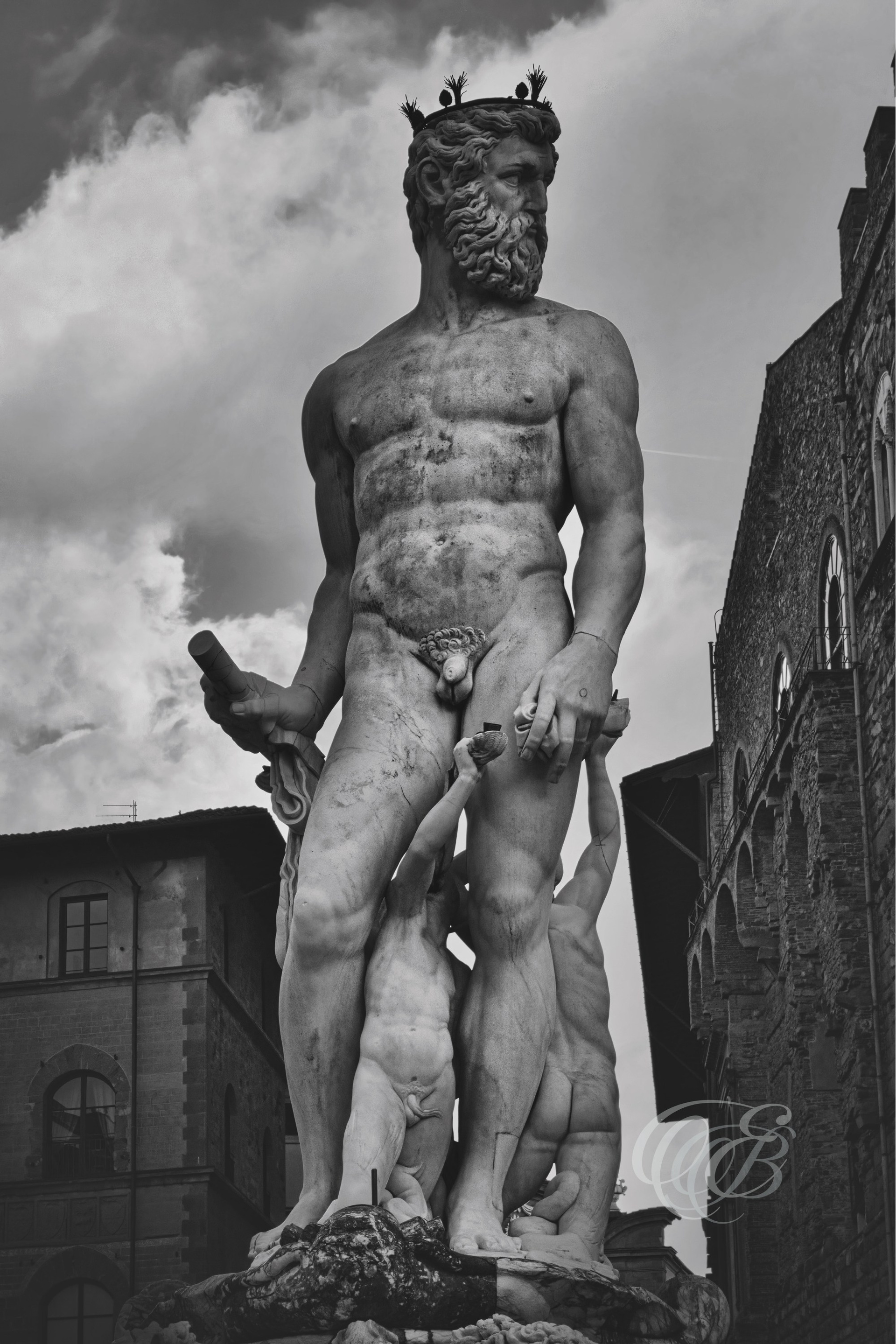
The Fountain of Neptune in Florence stands within Piazza della Signoria as a monumental example of Renaissance civic sculpture, created in the 16th century by Bartolomeo Ammannati with contributions from Giambologna. The matte black and white treatment emphasizes sculptural mass, surface detail, and the shifting contrast of sunset light across stone and bronze. Eduardo Bartoli Photography.
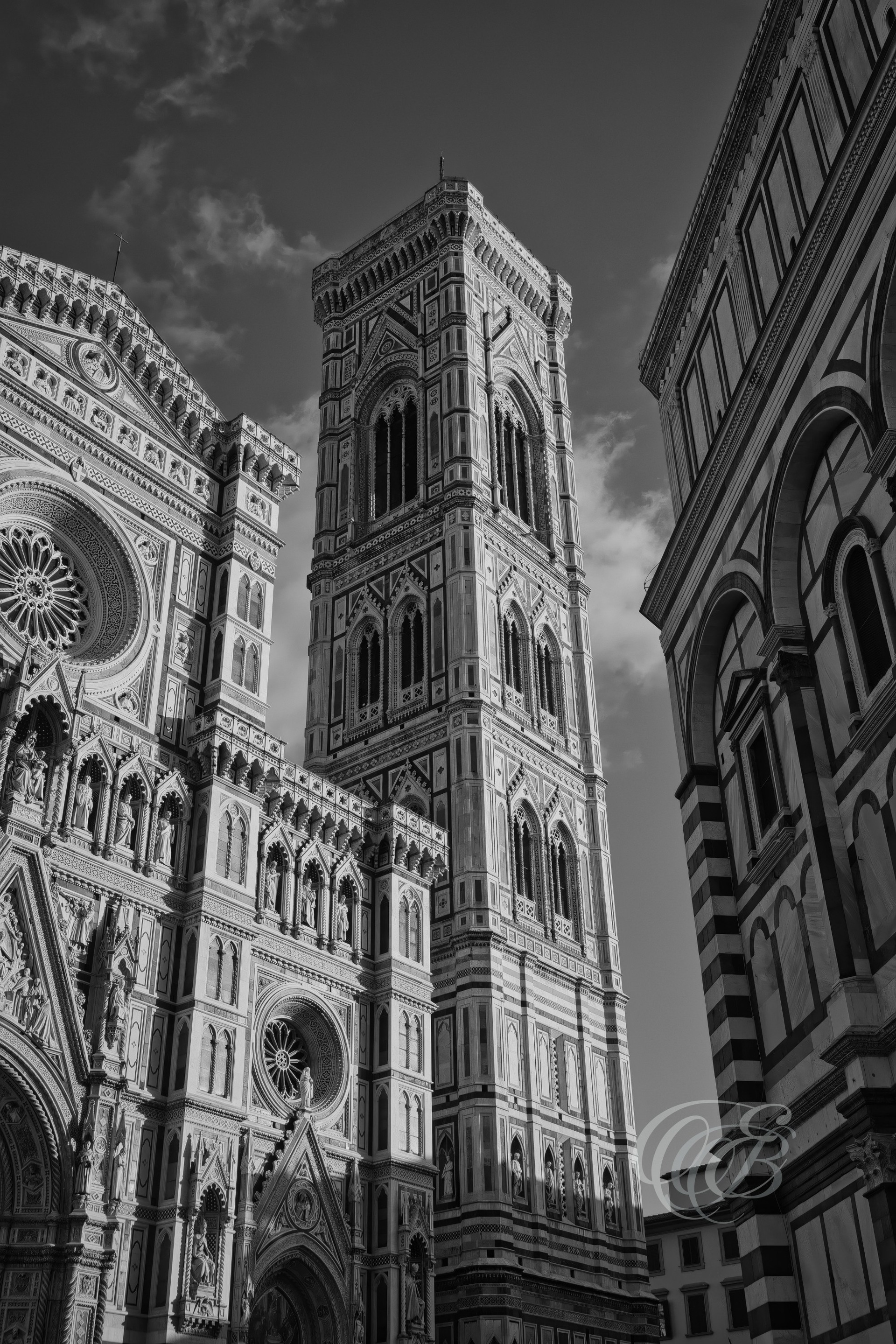
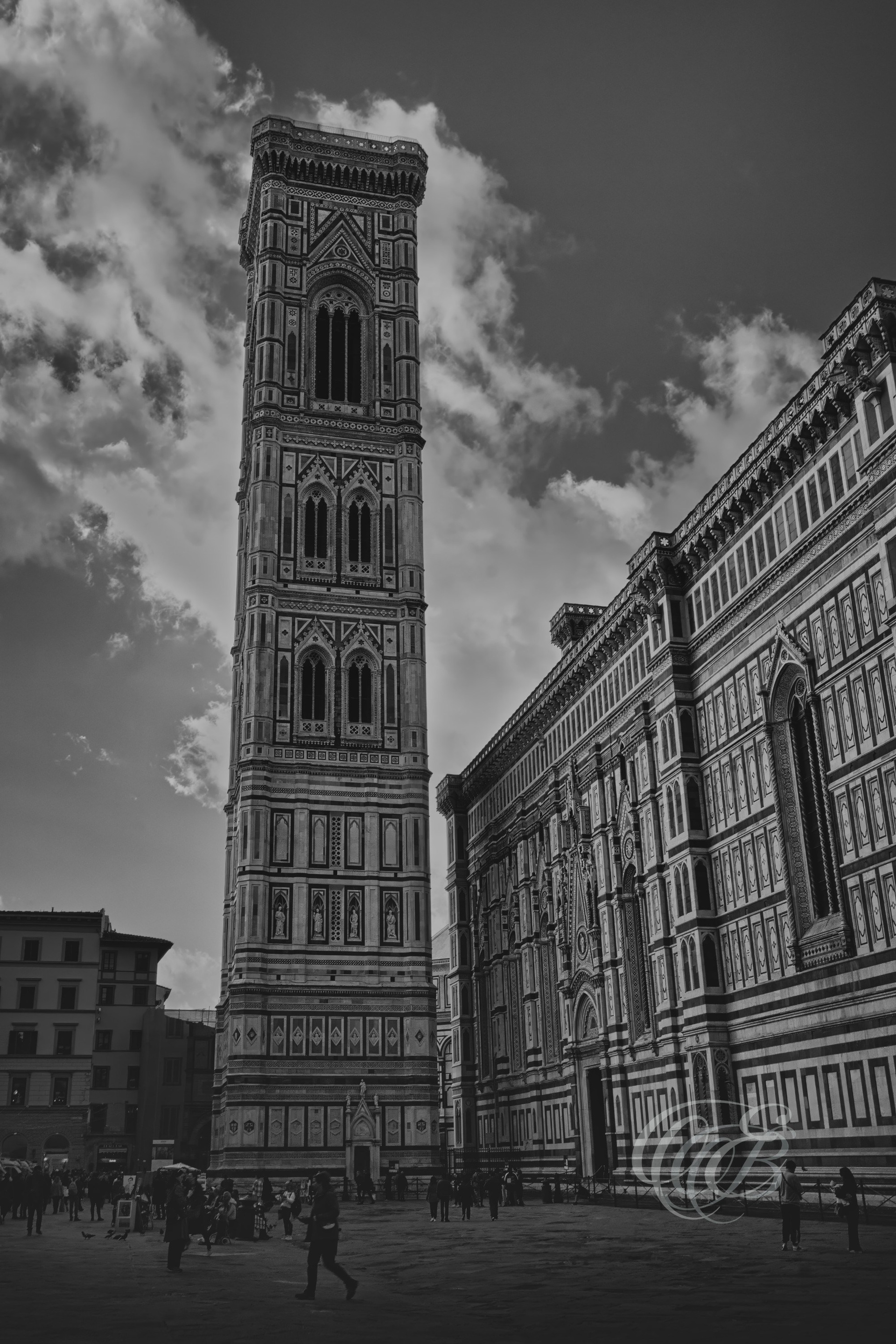
Giotto’s Bell Tower stands beside Florence Cathedral as a landmark of 14th-century Gothic architecture, initiated by Giotto di Bondone and completed by Andrea Pisano and Francesco Talenti. Its vertical structure and intricate marble detailing reflect the craftsmanship and ambition of medieval Florence. The black and white treatment at sunset emphasizes geometry, contrast, and the tower’s sculptural presence against shifting light. Eduardo Bartoli Photography.
Long exposure photography transforms fleeting movement into flowing forms, revealing patterns that are often overlooked in everyday observation. In this black and white matte interpretation, the carousel becomes a study of motion, contrast, and atmosphere within one of Florence's most active public spaces. The reduced tonal palette encourages attention to the relationship between movement and stillness, offering a different perspective on a familiar scene in the historic center. Eduardo Bartoli Photography.
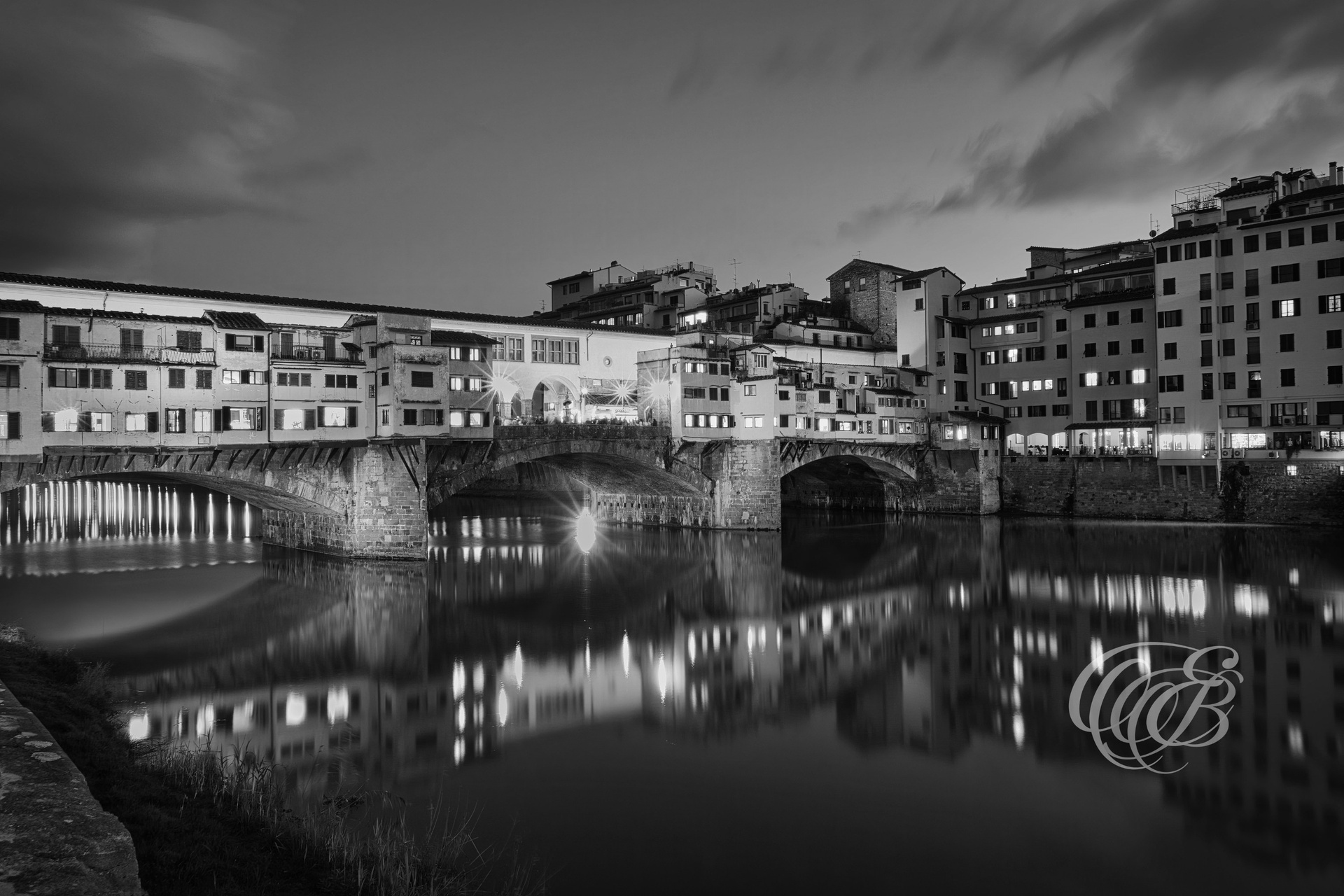
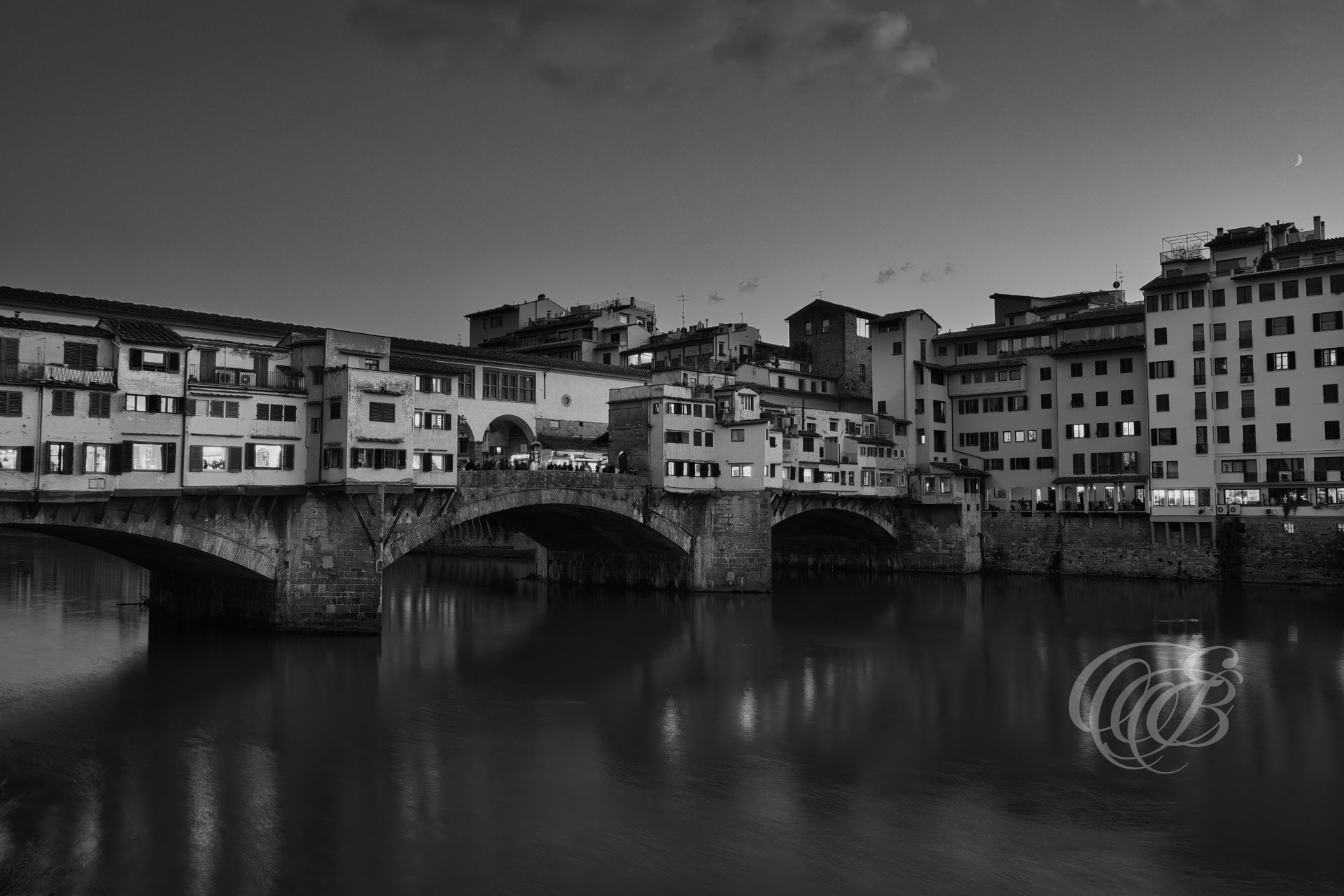
The Ponte Vecchio spans the Arno River in Florence, a medieval structure rebuilt in the 14th century and known for its continuous line of shops and enduring presence in the city’s historic center. The black and white treatment at sunset emphasizes tonal contrast, architectural rhythm, and the reflection of the bridge across the river surface. Eduardo Bartoli Photography.
A window detail from Santa Maria del Fiore reflects the layered architectural language of Florence’s cathedral, where Gothic structure and early Renaissance refinement coexist within a single monumental work. The black and white treatment emphasizes contrast, stone texture, and the geometry of light across the carved frame. Eduardo Bartoli Photography.
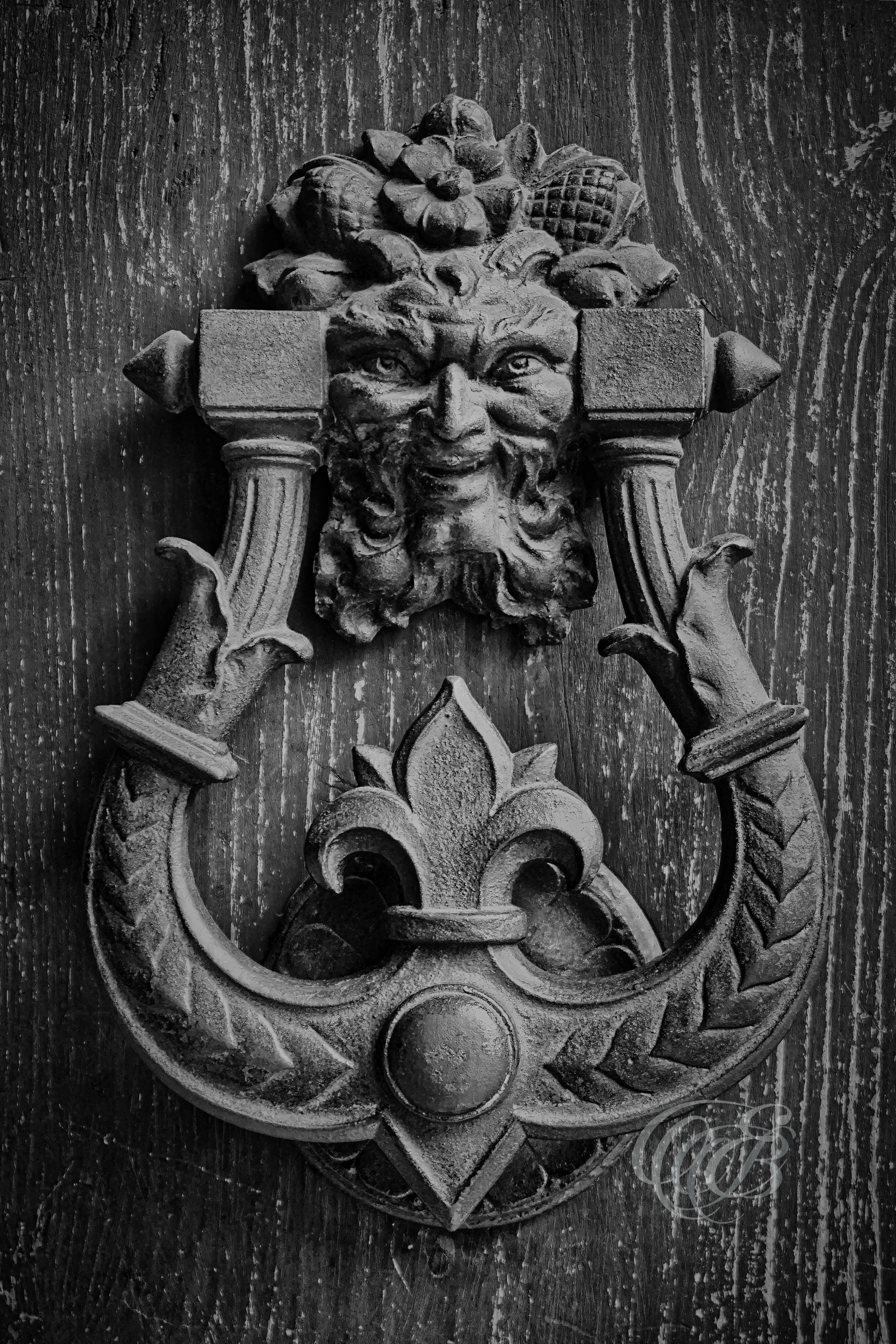
An antique door knocker in Florence reflects the city’s long tradition of architectural detail, where everyday objects are shaped with craft and permanence across centuries of urban history. The black and white treatment emphasizes surface texture, wear, and the sculptural quality of the metalwork. Eduardo Bartoli Photography.
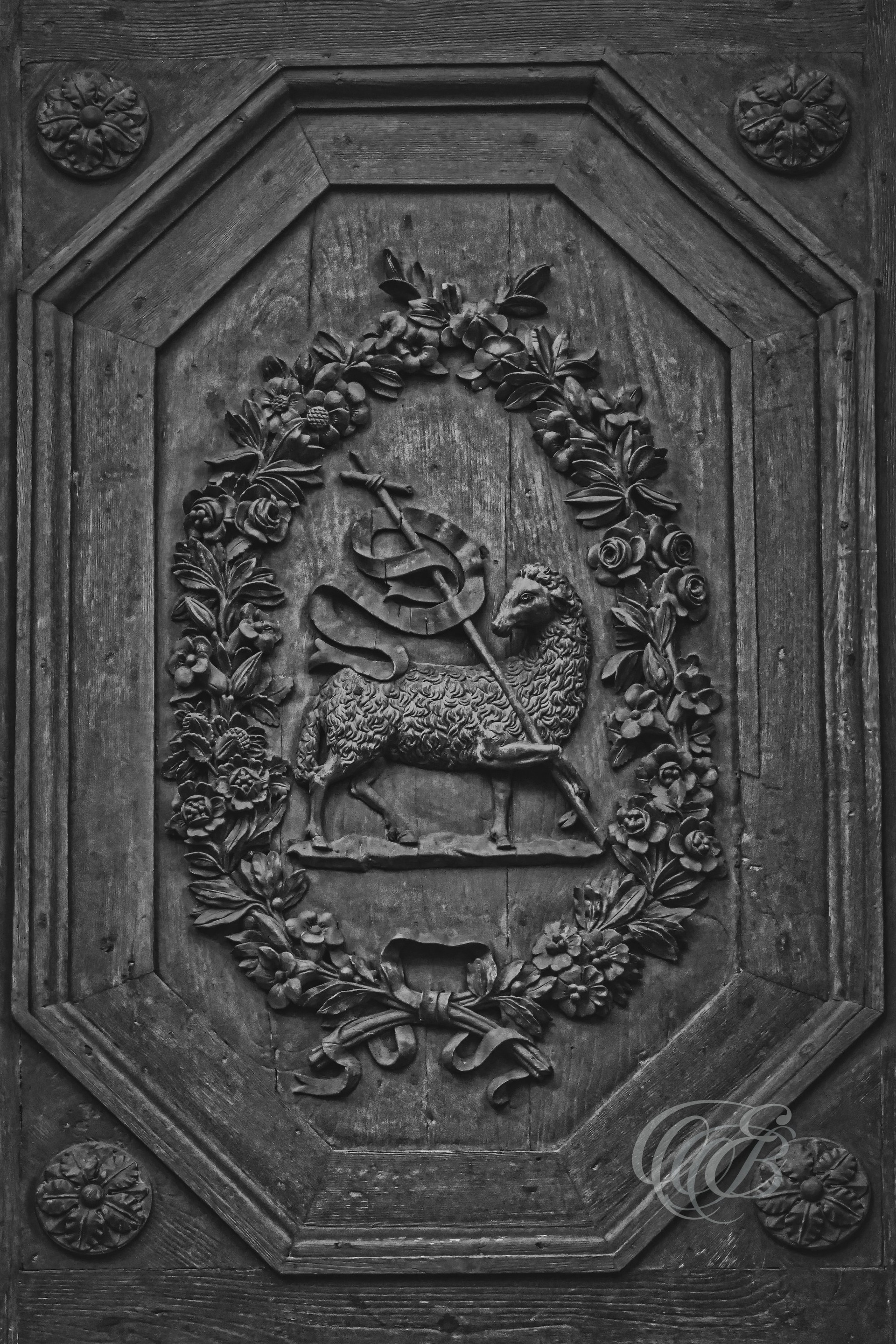
A bronze relief of the Agnus Dei appears on one of the ornate doors of the Cathedral of Santa Maria del Fiore, part of Florence’s sacred artistic heritage shaped through centuries of religious craftsmanship and symbolic imagery. The black and white rendering emphasizes relief, texture, and the sculptural detail of the metalwork within the architectural framework of the cathedral doors. Eduardo Bartoli Photography.
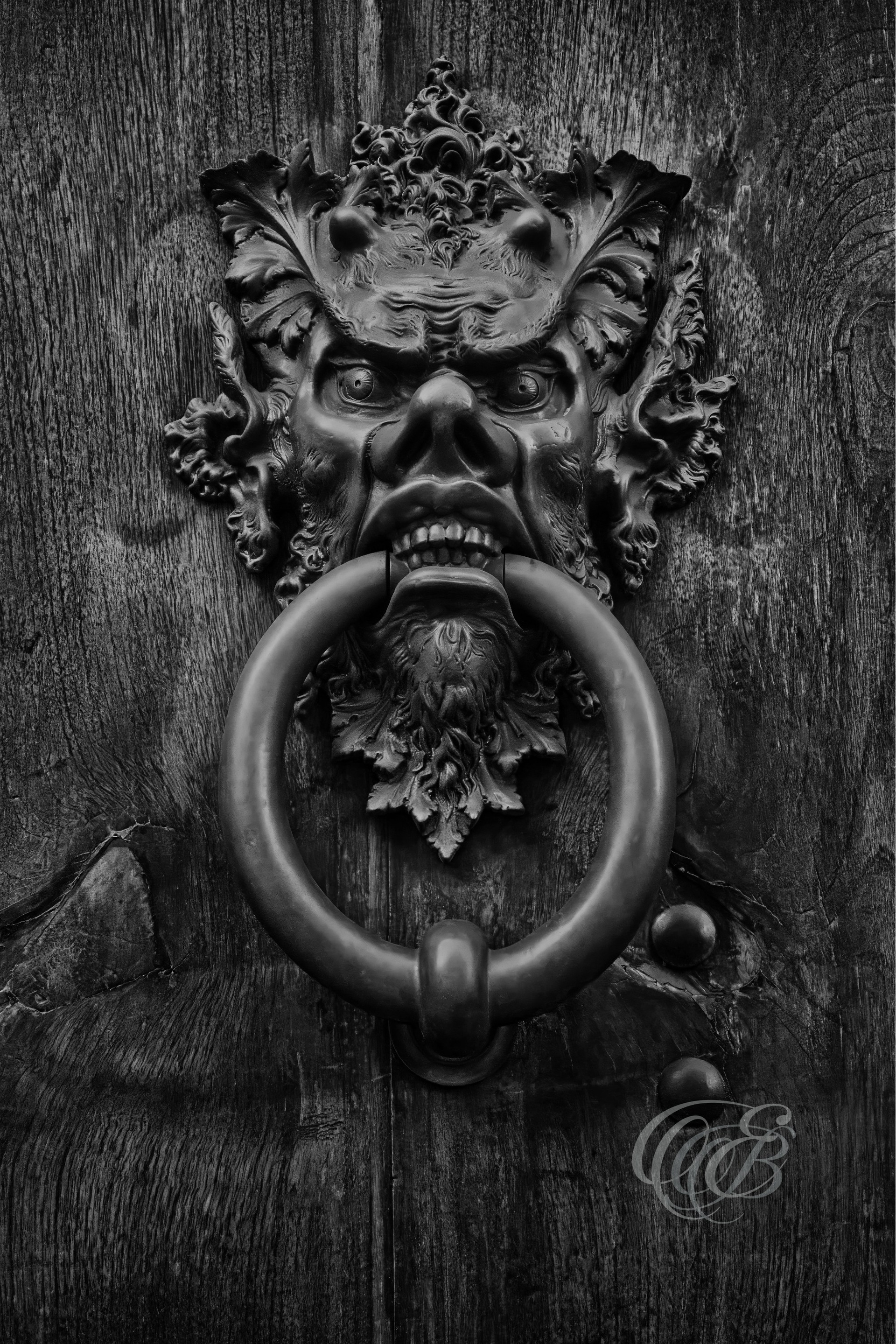
A bronze door knocker in Florence takes on a striking, sculptural presence through its expressive design, reflecting the city’s tradition of detailed metalwork and architectural ornamentation across historic buildings. The black and white treatment emphasizes texture, patina, and the strong contrast of form and shadow within the object’s carved structure. Eduardo Bartoli Photography.
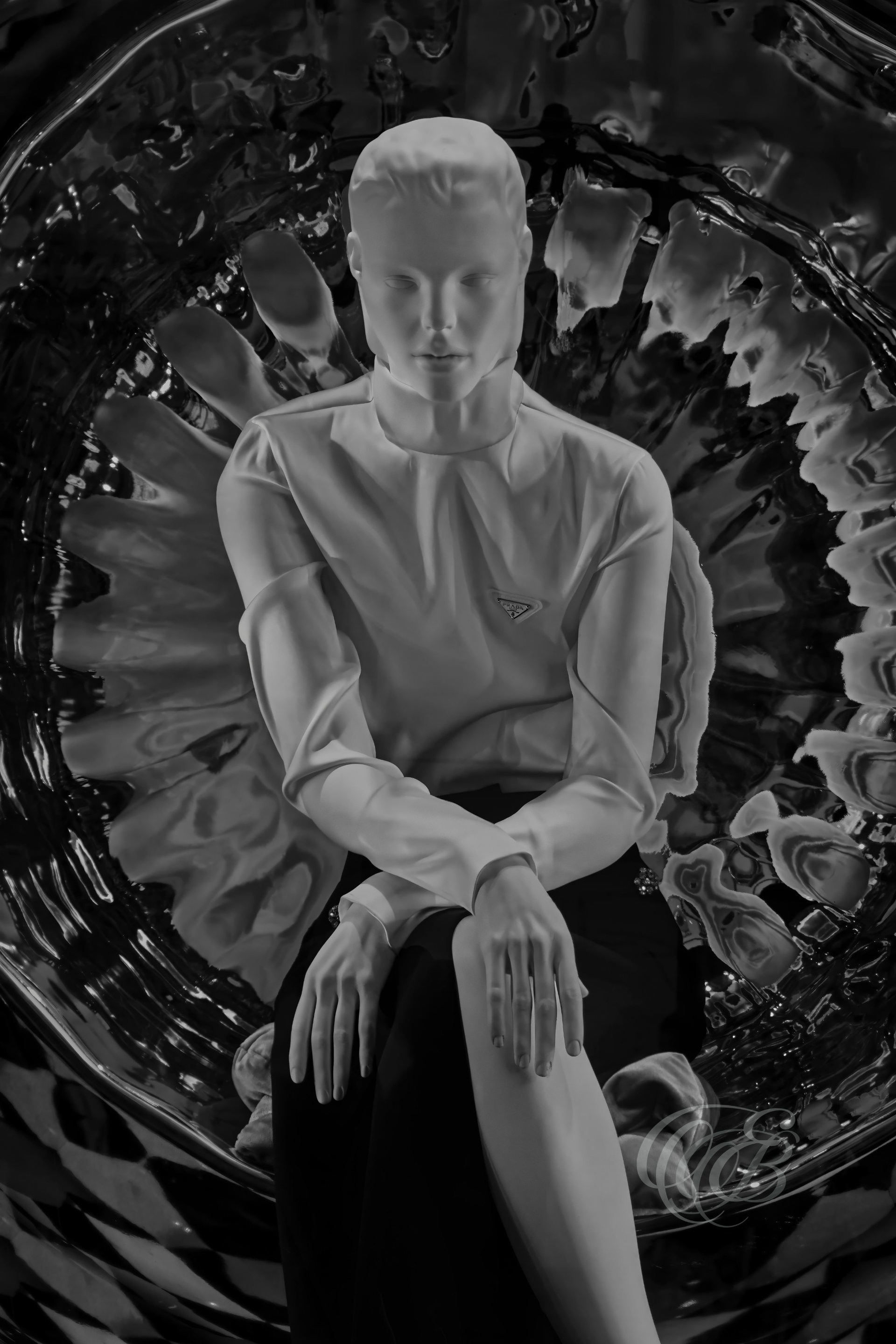
Inside the historic city known for Renaissance art and architecture, a Prada storefront display presents a contemporary contrast to its surroundings, where modern fashion design intersects with centuries of cultural heritage. The monochrome rendering emphasizes form, reflection, and the sculptural presence of the mannequin within the curated retail space. Eduardo Bartoli Photography.
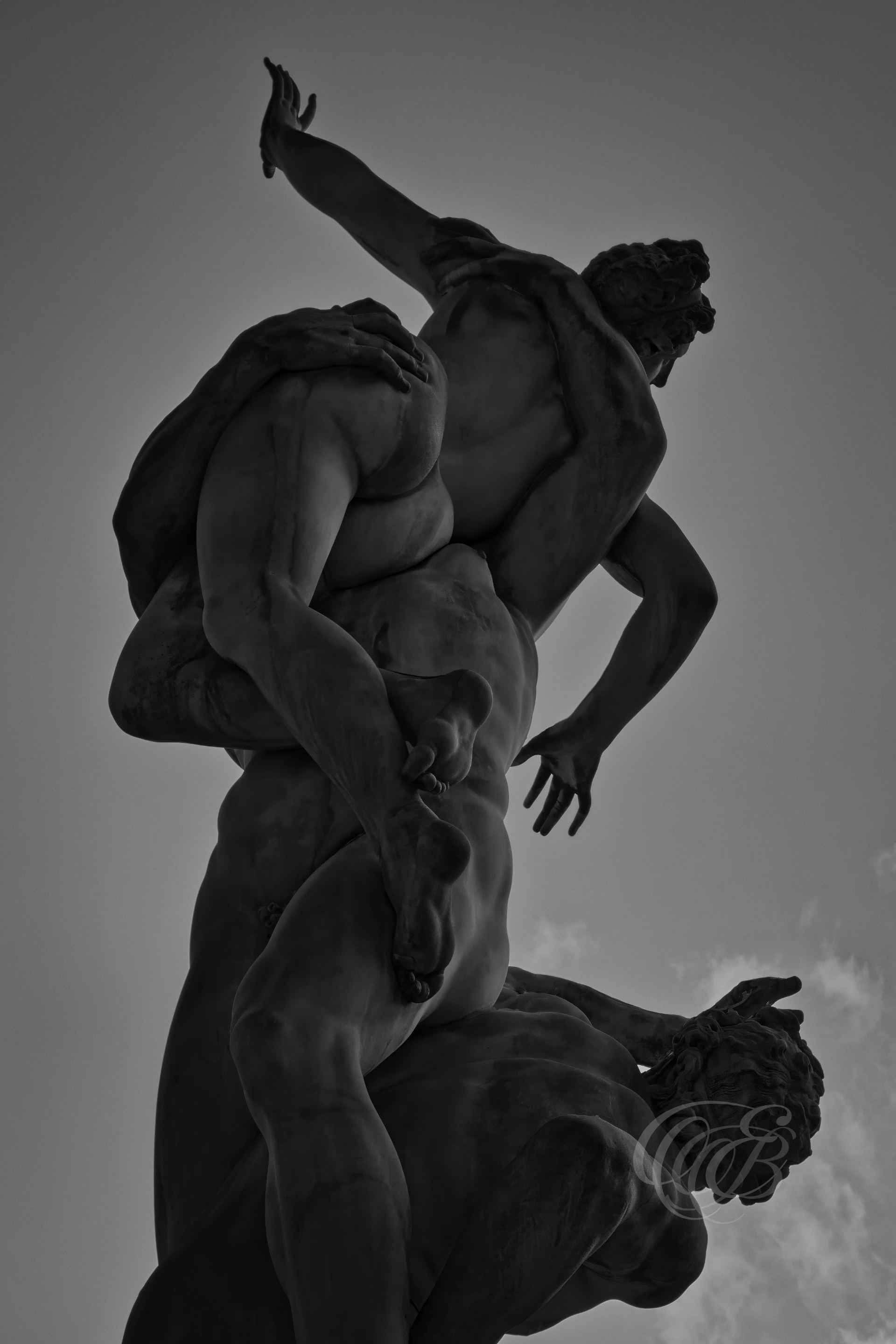
Giambologna’s The Rape of the Sabine Women, completed in 1583 and displayed at the Loggia dei Lanzi in Piazza della Signoria, is regarded as one of the masterpieces of Mannerist sculpture. Carved from a single block of marble, the work is celebrated for its spiraling composition, dynamic movement, and technical complexity. The black and white treatment emphasizes the sculpture’s form, texture, and dramatic interplay of light and shadow. Eduardo Bartoli Photography.
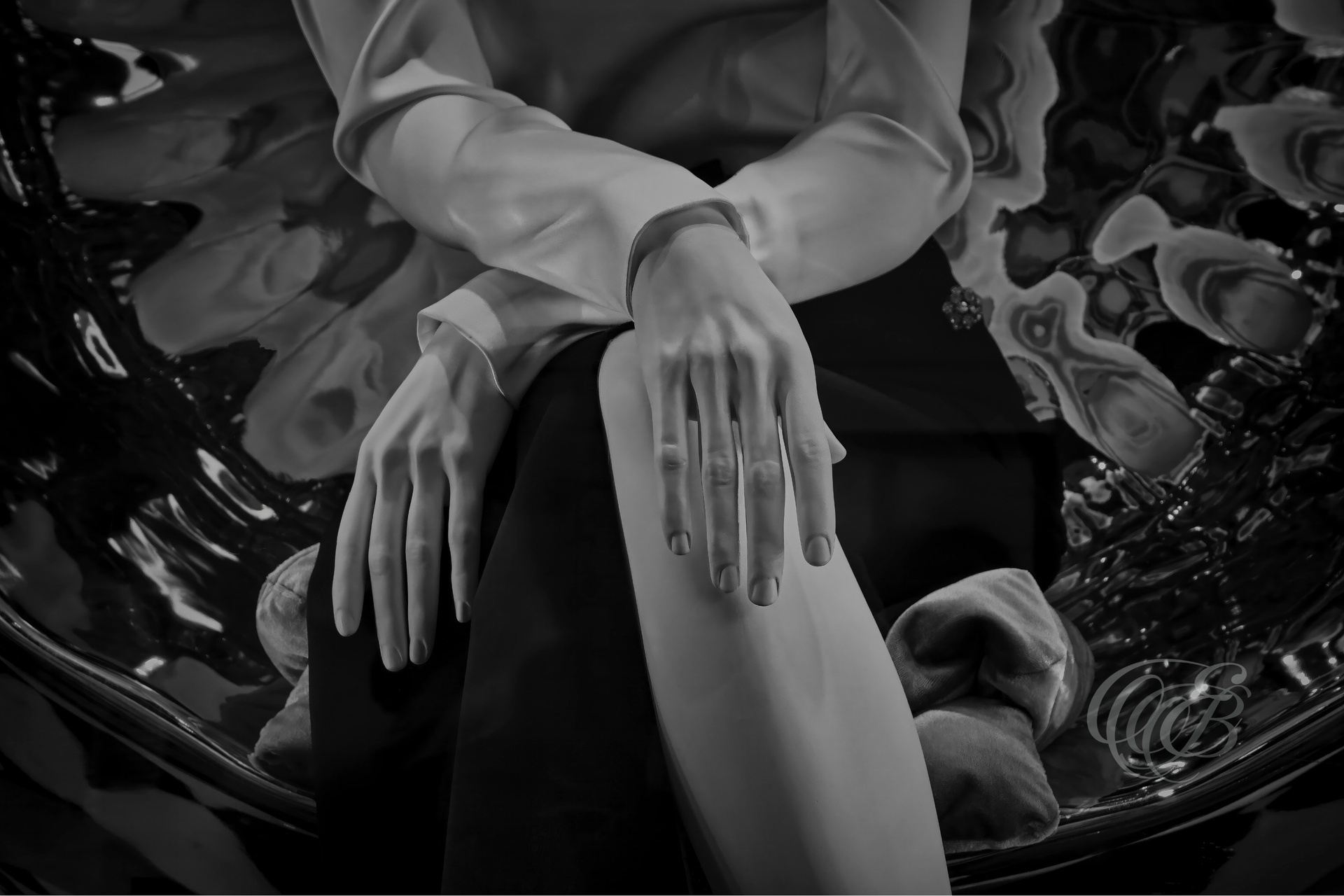
A Prada storefront display in Florence presents a mannequin detail focused on hands arranged in a refined, mannerist-inspired pose that reflects contemporary fashion design within a historic urban setting. The matte black and white treatment emphasizes form, composition, and the sculptural quality of the gesture. Eduardo Bartoli Photography.
The Ponte Vecchio spans the Arno River in Florence, a medieval bridge originally built in Roman times and rebuilt in its current form in the 14th century, known for its continuous line of shops and enduring architectural presence. The black and white treatment reduces the scene to structure, reflection, and tonal contrast as light fades across the river surface. Eduardo Bartoli Photography.
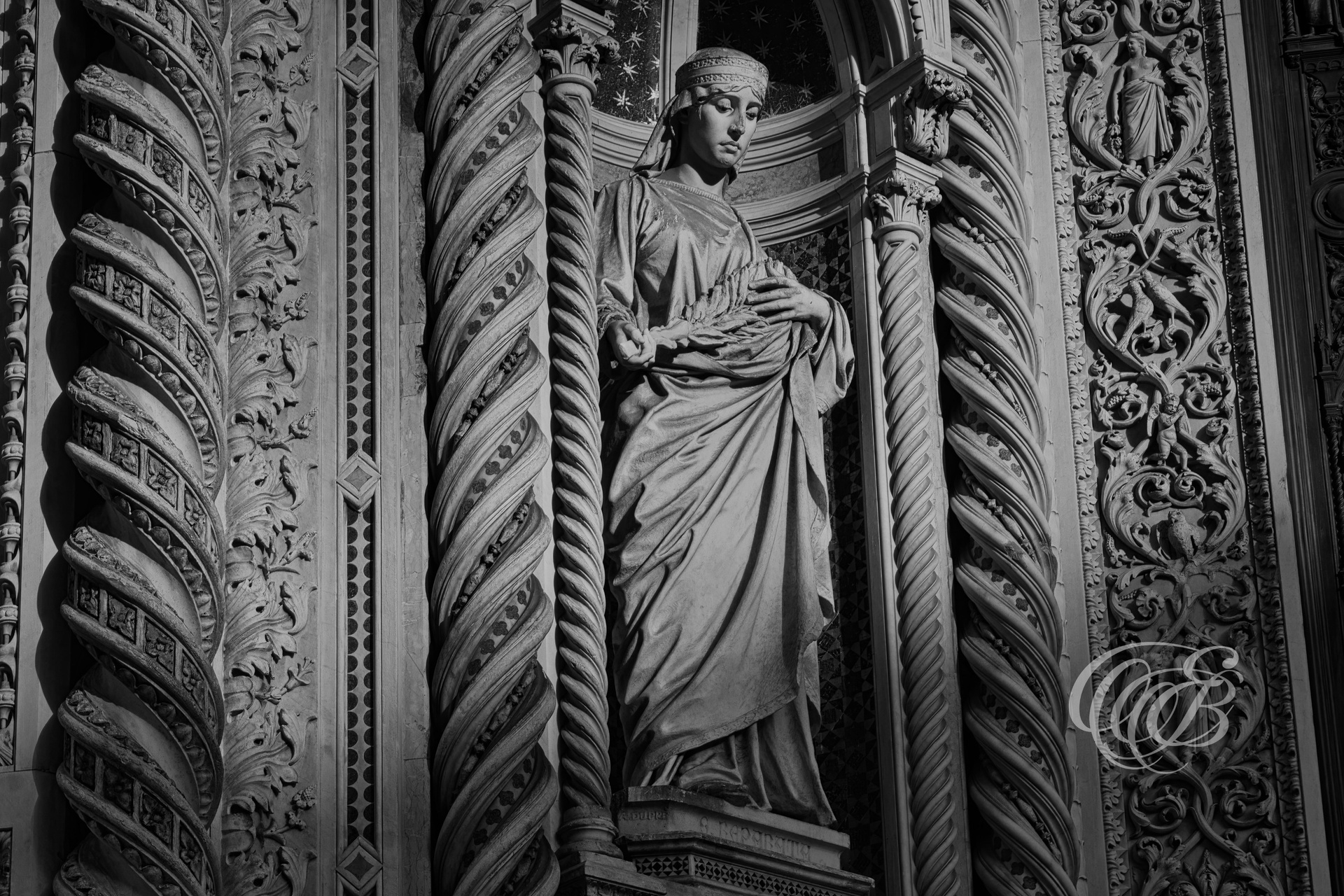
The sculpture of Saint Reparata stands outside the Cathedral of Santa Maria del Fiore in Florence, reflecting the city’s layered sacred history and its devotion to early Christian tradition. The black and white treatment emphasizes carved detail, material texture, and the relationship between sculpture and the cathedral’s architectural façade. Eduardo Bartoli Photography.
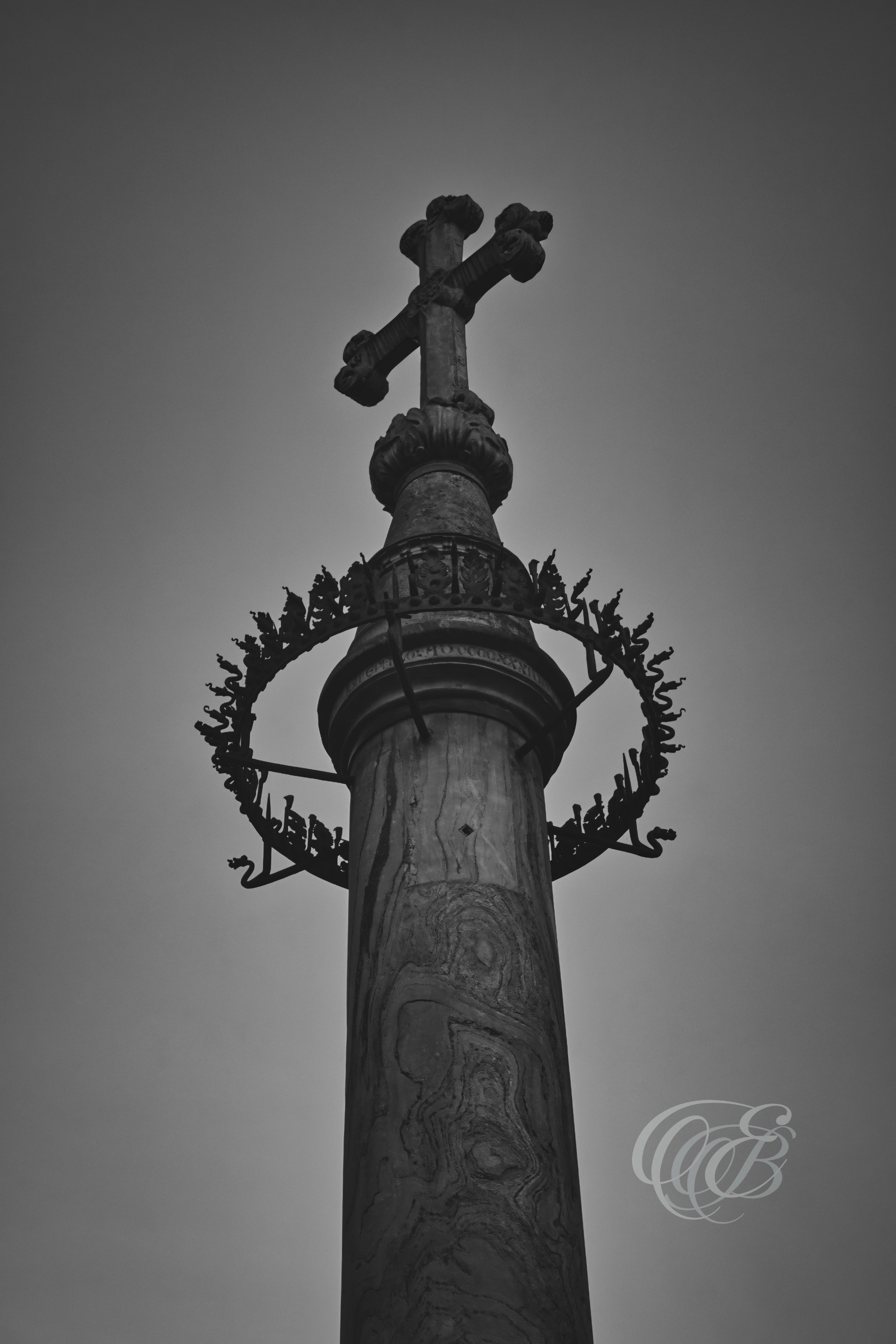
The Cross of San Giovanni stands within Florence’s historic religious center as a symbol linked to the city’s early Christian tradition and the Baptistery of San Giovanni, one of its oldest surviving monuments. The matte black and white treatment emphasizes form, texture, and the quiet monumentality of the object within its sacred urban setting. Eduardo Bartoli Photography.
The Cathedral of Santa Maria del Fiore defines the historic center of Florence, shaped over centuries beginning in 1296 under Arnolfo di Cambio and later completed with Filippo Brunelleschi’s dome in the 15th century. Its façade and architectural composition reflect the evolution of Gothic and early Renaissance design. The matte black and white treatment emphasizes material texture, structural detail, and the cathedral’s monumental presence. Eduardo Bartoli Photography.
The Campanile of Santa Maria del Fiore rises beside Florence Cathedral as a key example of 14th-century Gothic architecture, originally designed by Giotto and completed by Andrea Pisano and Francesco Talenti. Its vertical rhythm and detailed marble façade reflect the craftsmanship of medieval Florence. The matte black and white treatment emphasizes surface texture, stone patterning, and architectural height. Eduardo Bartoli Photography.
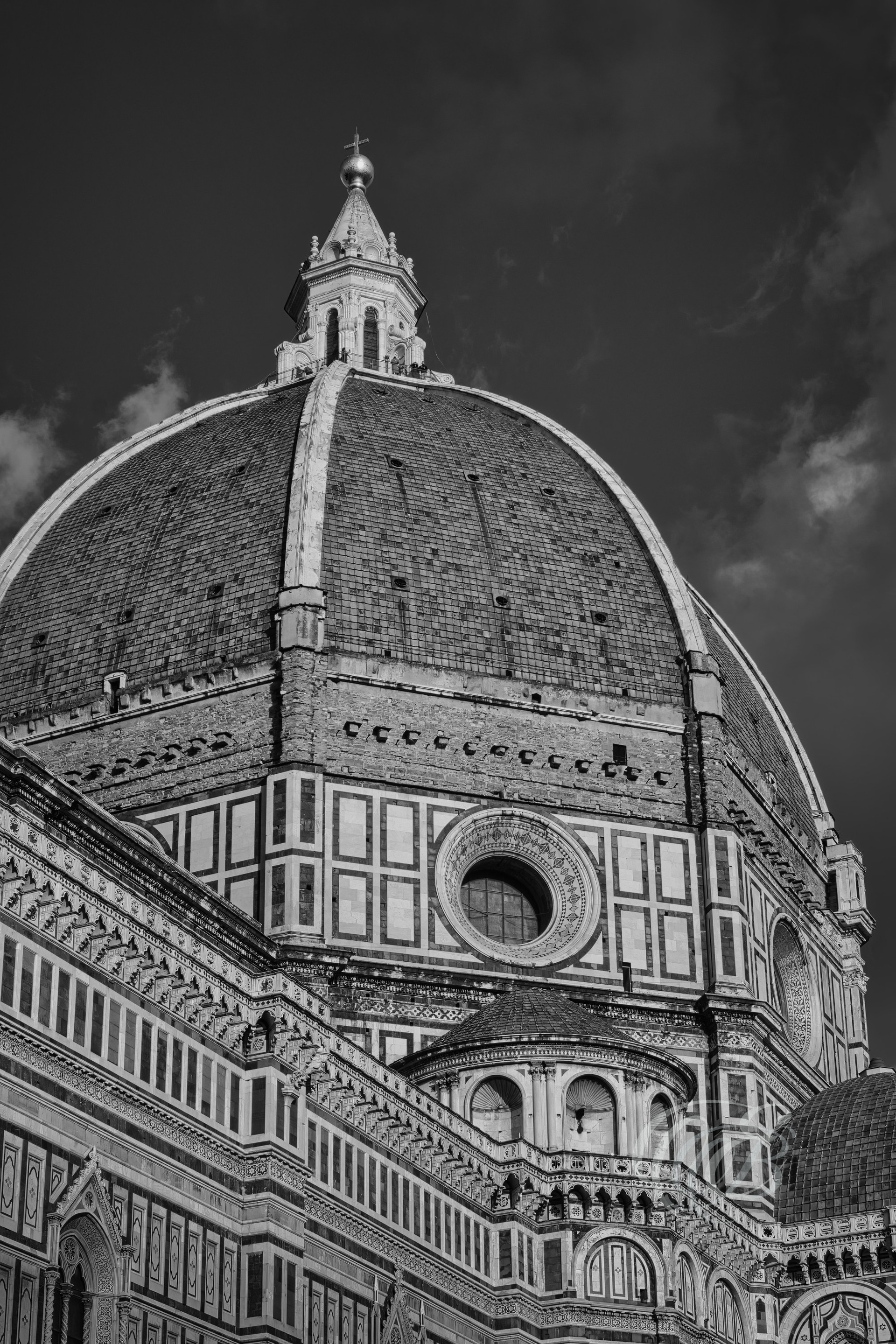
The Dome of Santa Maria del Fiore rises over Florence as a landmark of Renaissance engineering, completed in the 15th century under Filippo Brunelleschi’s innovative design. Its vast structure reflects a pivotal moment in architectural history, where engineering ambition and artistic vision converge. The black and white treatment emphasizes curvature, scale, and structural detail against the sky. Eduardo Bartoli Photography.
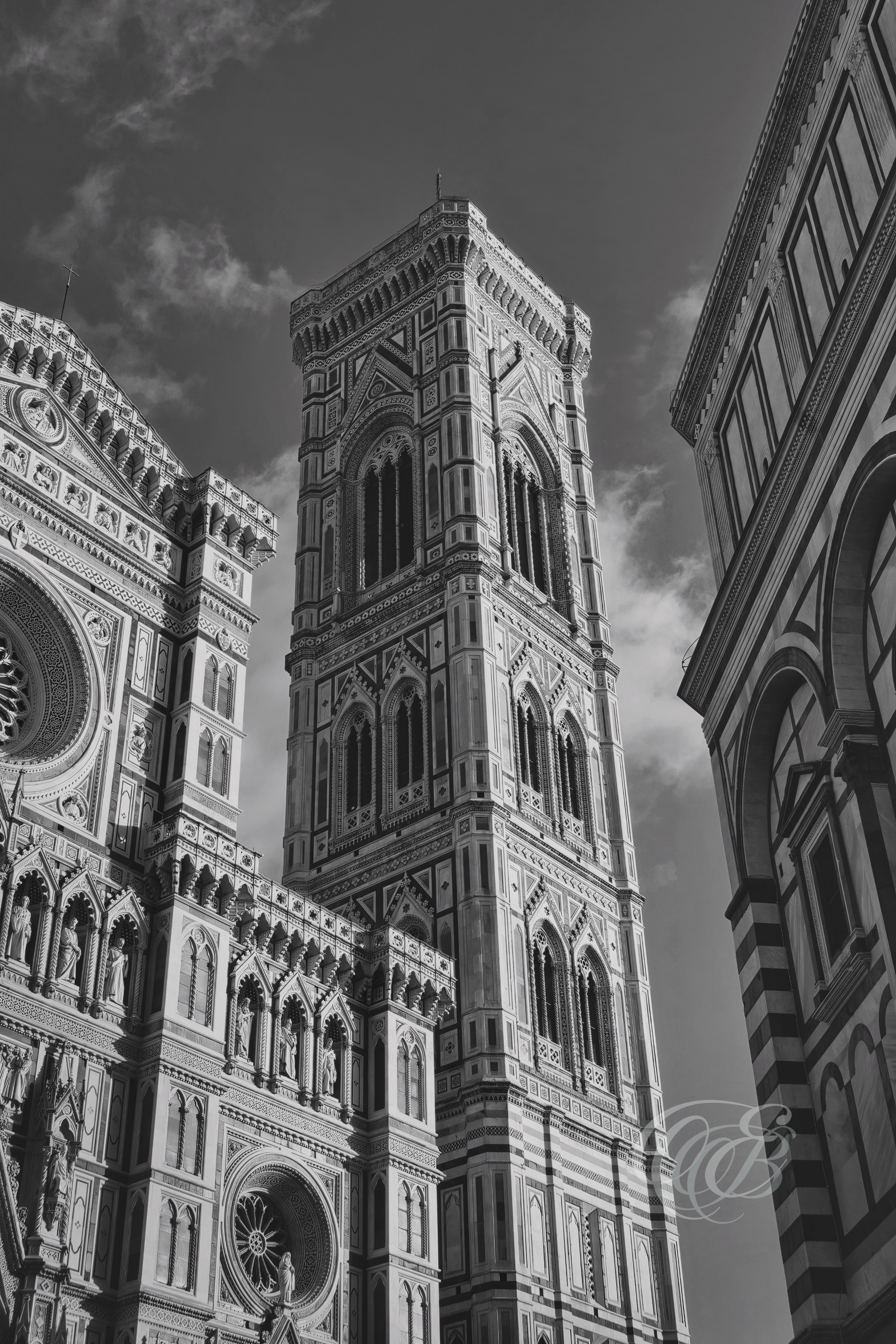
Giotto’s Bell Tower (Campanile di Giotto) stands beside Florence Cathedral as one of the most significant works of Florentine Gothic architecture. Construction began in 1334 under Giotto di Bondone and was completed in 1359 by Andrea Pisano and Francesco Talenti. The black and white matte presentation places emphasis on the tower’s vertical presence and architectural detail, revealing the craftsmanship and historical significance that have made it a defining feature of Florence for nearly seven centuries. Eduardo Bartoli Photography.
The Gothic windows of Santa Maria del Fiore reflect the cathedral’s layered architectural development in Florence, where medieval design principles meet the evolving structure of one of Italy’s most significant religious buildings. The black and white treatment emphasizes geometry, light, and shadow across the stone tracery. Eduardo Bartoli Photography.
Brunelleschi’s Dome rises over Florence Cathedral as a defining achievement of 15th-century Renaissance engineering, designed by Filippo Brunelleschi to span the vast interior of Santa Maria del Fiore. The black and white treatment, set against sunset light, emphasizes curvature, structural geometry, and the interplay between architectural form and atmospheric contrast. Eduardo Bartoli Photography.
The Antica Giostra Toscana carousel in Florence is rendered through long exposure into softened traces of movement and light, where motion becomes abstract rhythm within the urban environment. The matte black and white treatment reduces the scene to tonal flow, texture, and atmospheric motion, enhancing its dreamlike, understated character. Eduardo Bartoli Photography.
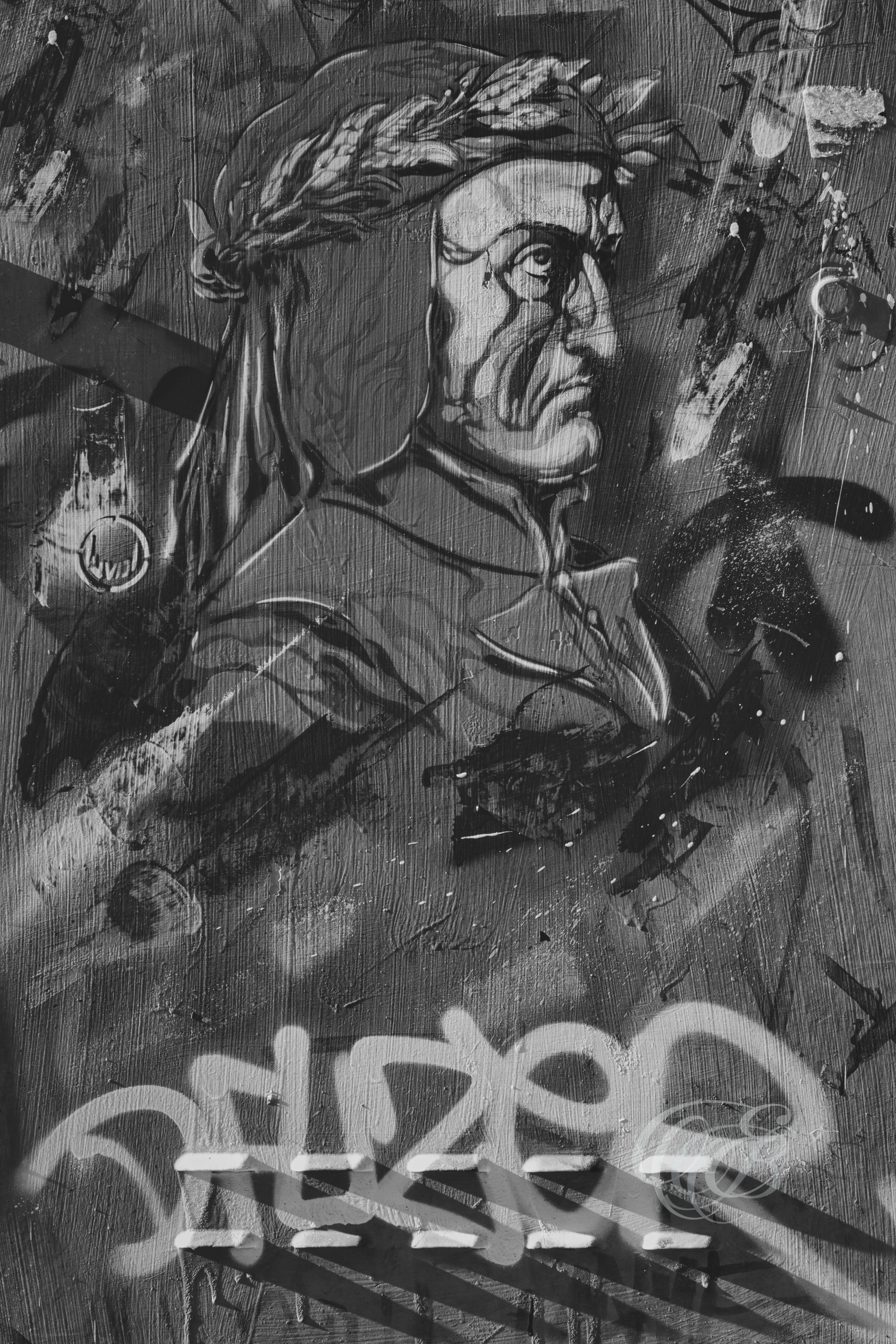
A street art depiction of Dante Alighieri appears within the urban fabric of Florence, where contemporary expression intersects with the enduring legacy of one of Italy’s most influential literary figures, author of The Divine Comedy in the early 14th century. The black and white treatment emphasizes texture, contrast, and the layered dialogue between modern graffiti and historical identity. Eduardo Bartoli Photography.
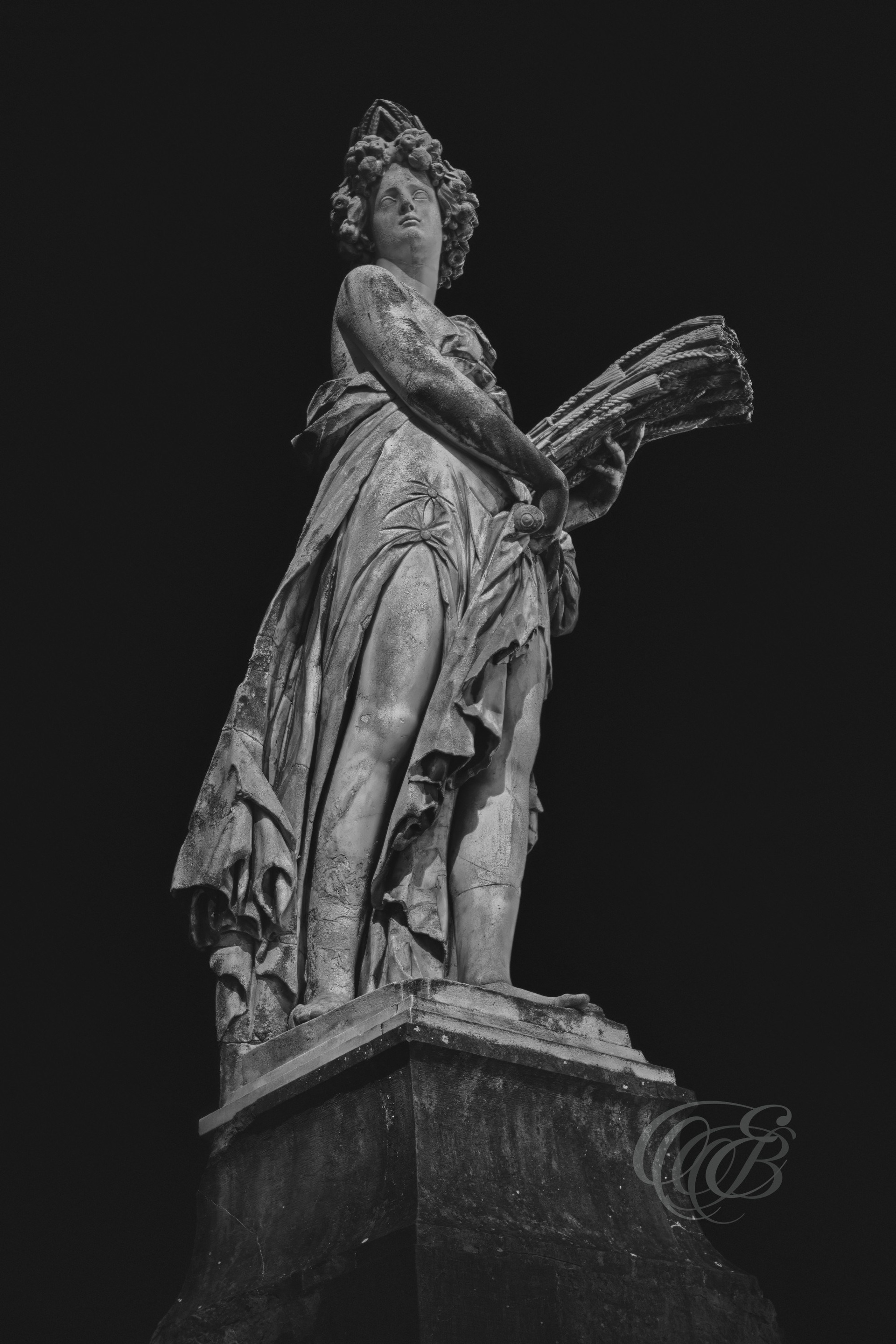
A classical allegorical figure representing Summer stands on Ponte Santa Trinita in Florence, part of the 16th-century sculptural ensemble that integrates Renaissance art with the architectural rhythm of the bridge over the Arno River. The black and white treatment emphasizes form, stone texture, and the contrast between sculpture and surrounding urban landscape. Eduardo Bartoli Photography.
Portfolios
Mallorca in Black & White — Fine Art Photography Noir
Mallorca
Street Photography Rome
Street Photography Rome in Black & White — Fine Art Photography Noir
Rome
Florence
Rome in Black & White — Fine Art Photography Noir
Italy Photography
Italy Travel Photography — Rome